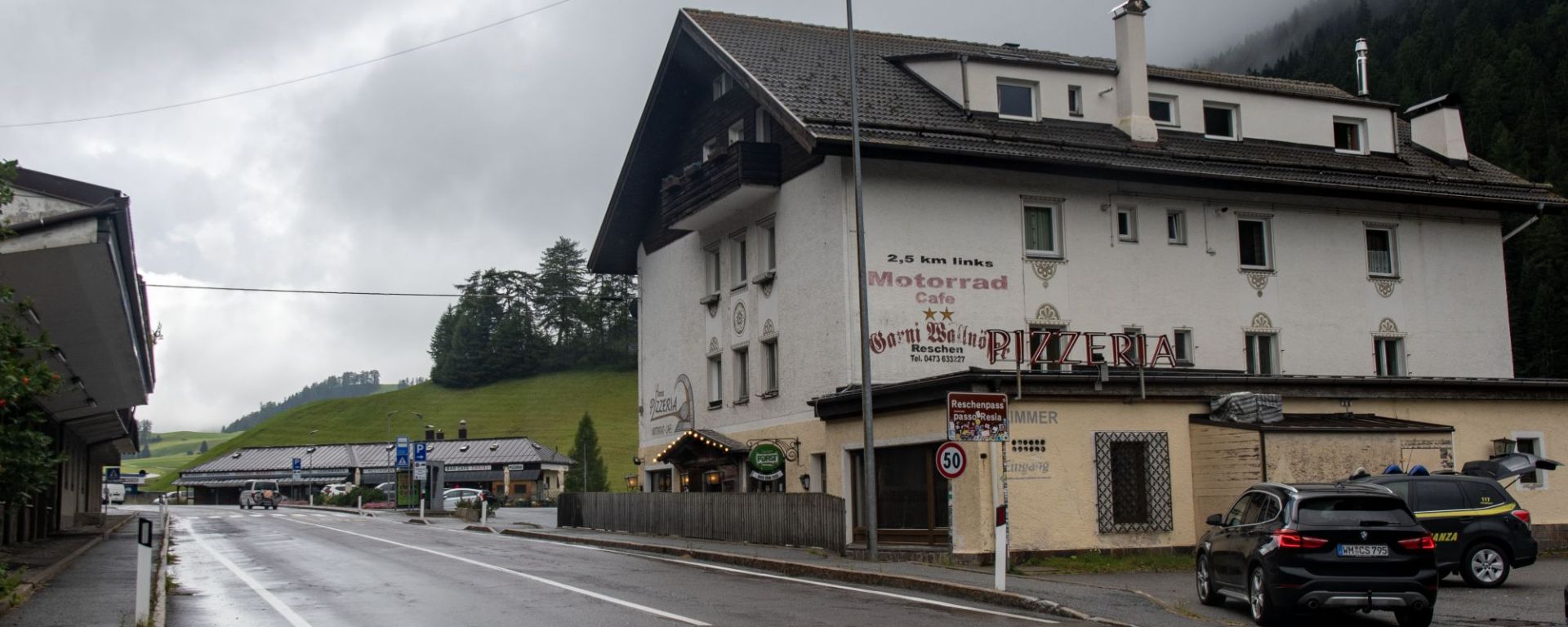

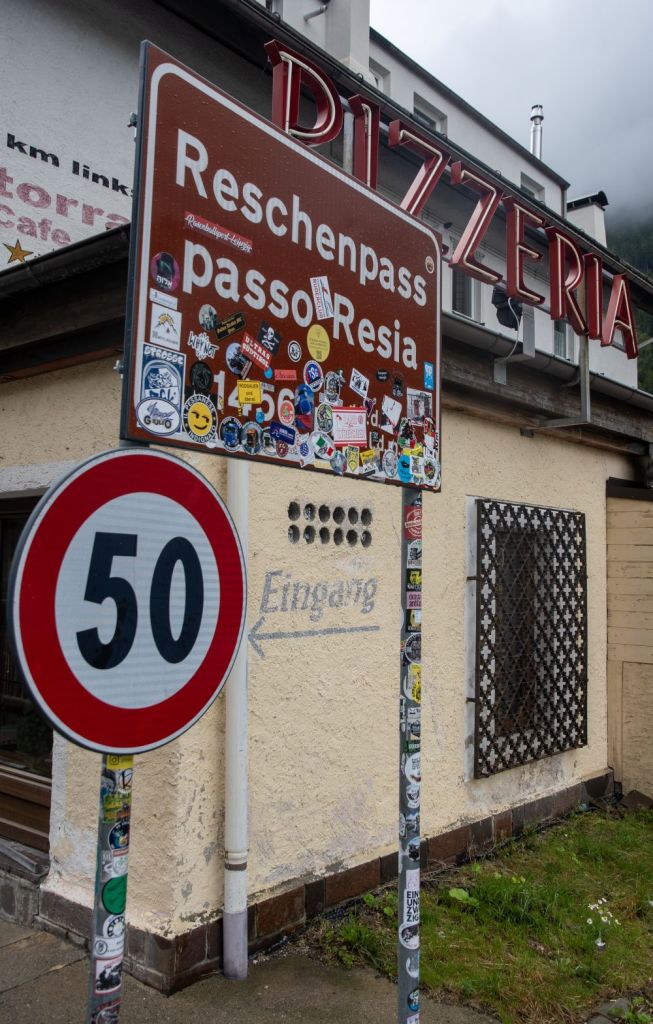
Reschen Pass (German: Reschenpass, Italian: Passo di Resia) is a mountain pass across the main chain of the Alps, connecting the Upper Inn Valley in the northwest with the Vinschgau region in the southeast. Since 1919, the border between South Tyrol, Italy and Tyrol, Austria has approximately followed the watershed, the pass summit at a height of 1,504 metres (4,934 ft) being completely on Italian territory. We visited this point as part of the IBRG LIVCO-25 expedition.
Reschen is one of the principal passes of the Alps, located between Brenner Pass to the east and the Splügen to the west. There is lots to do in this area including UNESCO World Heritage Sites, and hiking, we however headed on to visit our next tripoint ATCHIT.
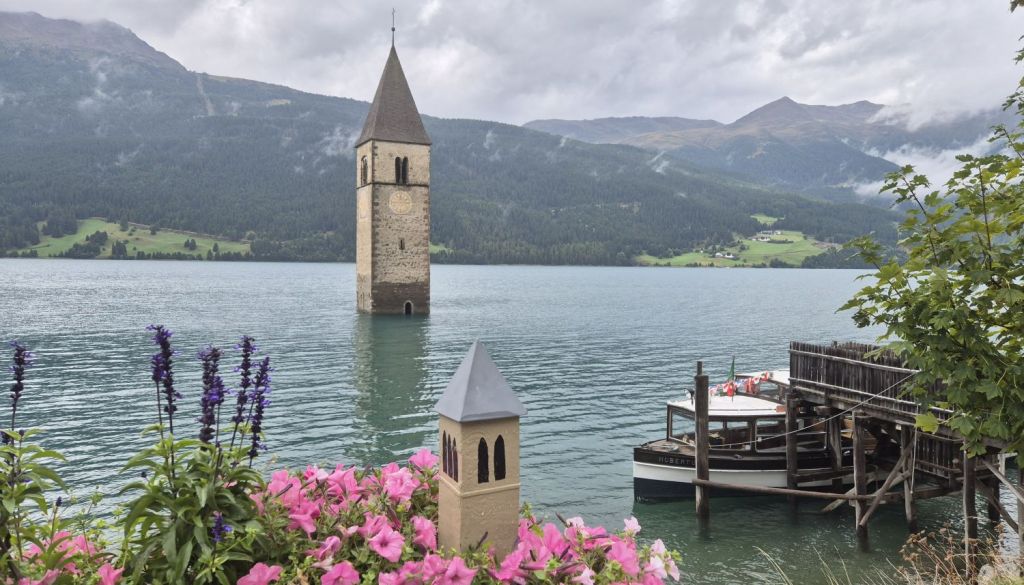
The village of Reschen (Resia) is directly located on the watershed, on the shore of the Reschensee reservoir, built in 1950 and famous for the 14th Century bell tower of St Katharina von Graun, which emerges from the water in front of Graun municipality.
The tower is dedicated to St Catherine and is now a listed building. It is a symbolic landmark of the region that attracts visitors from all over the world.
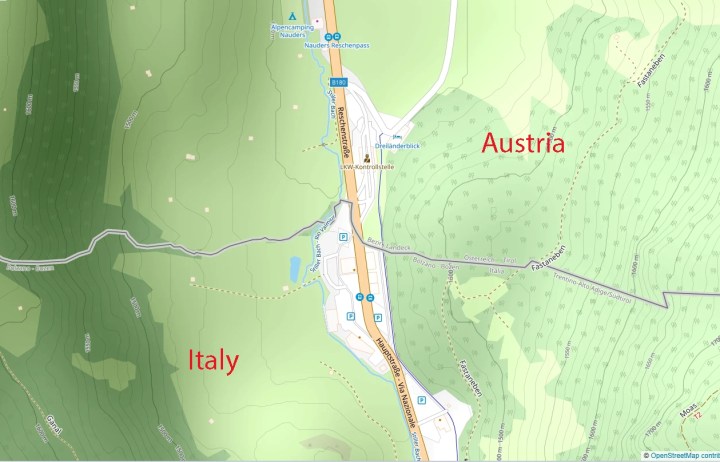
Austrian Side
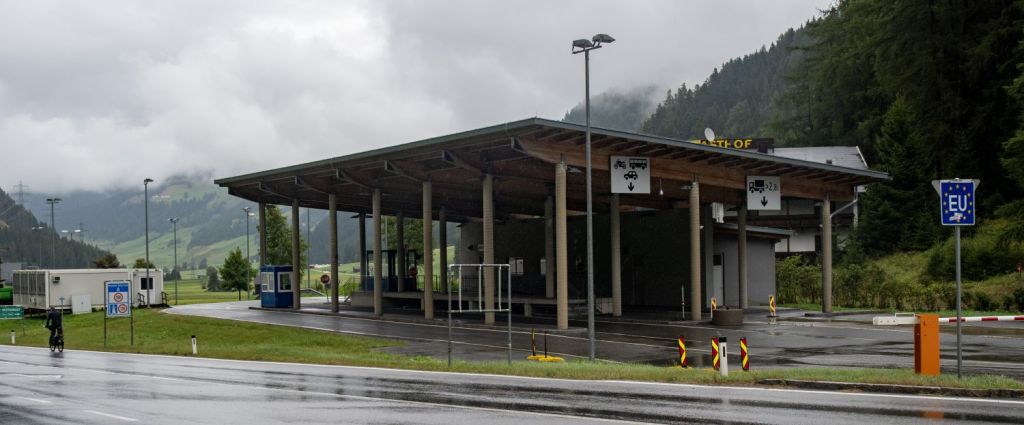
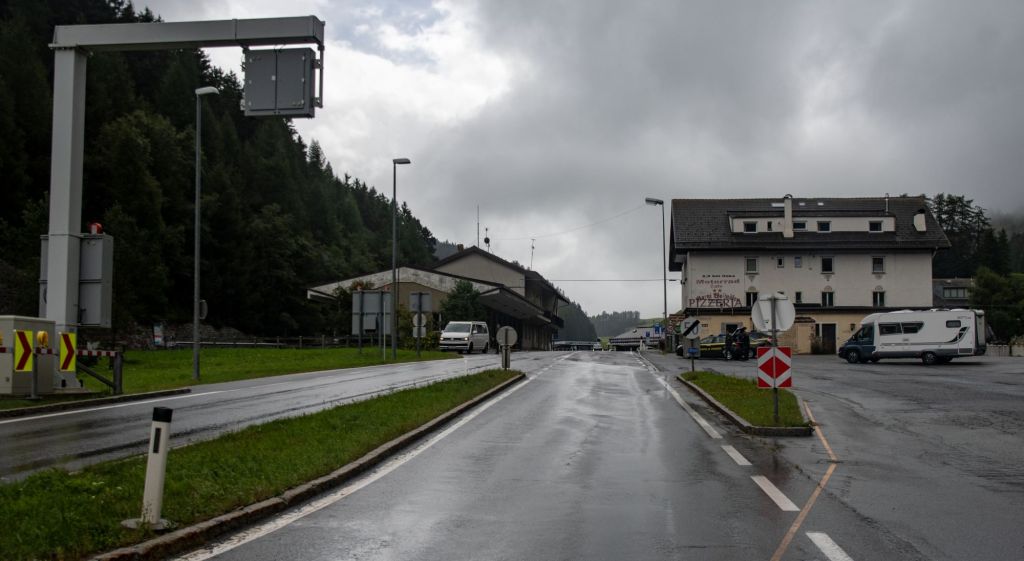
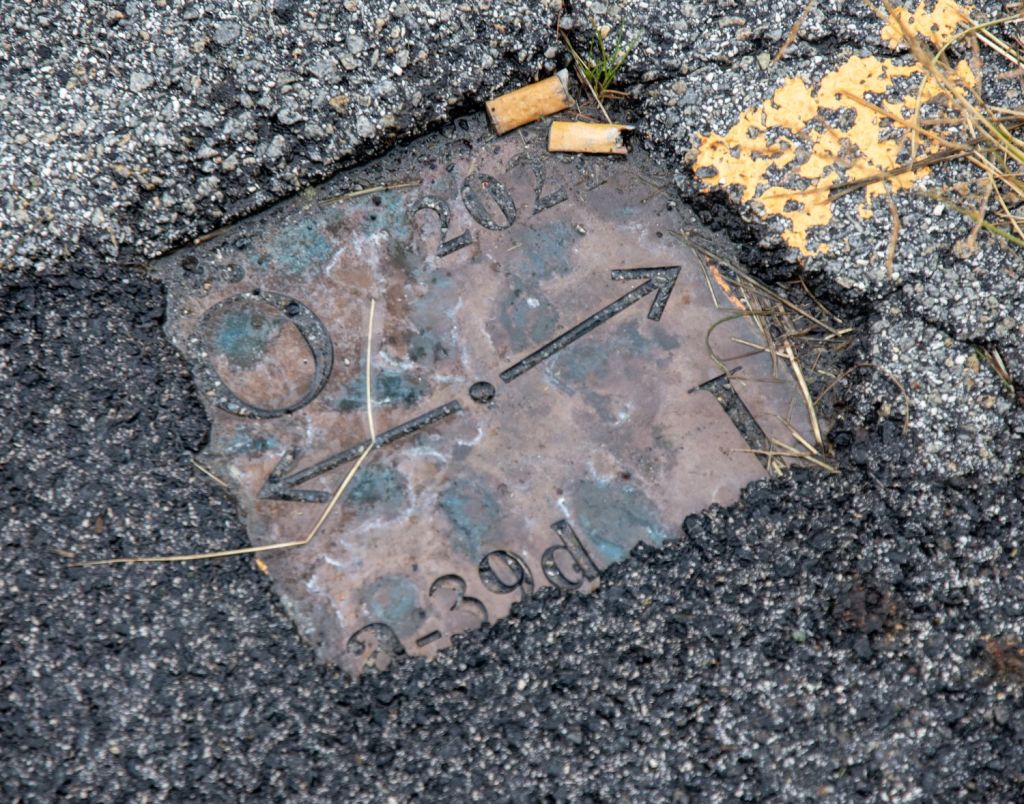
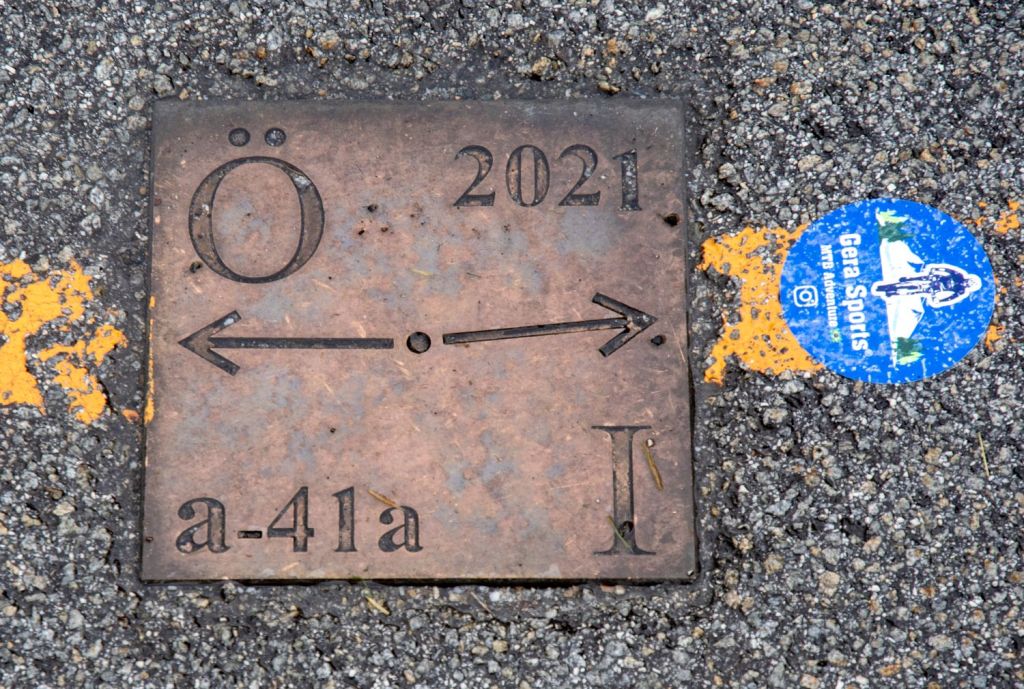
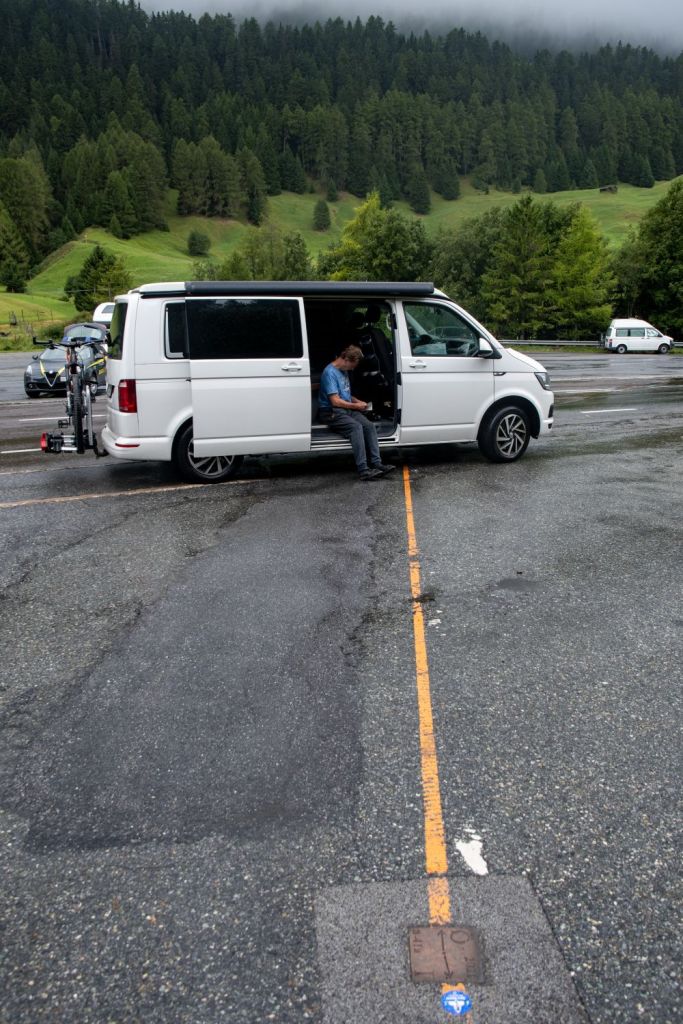
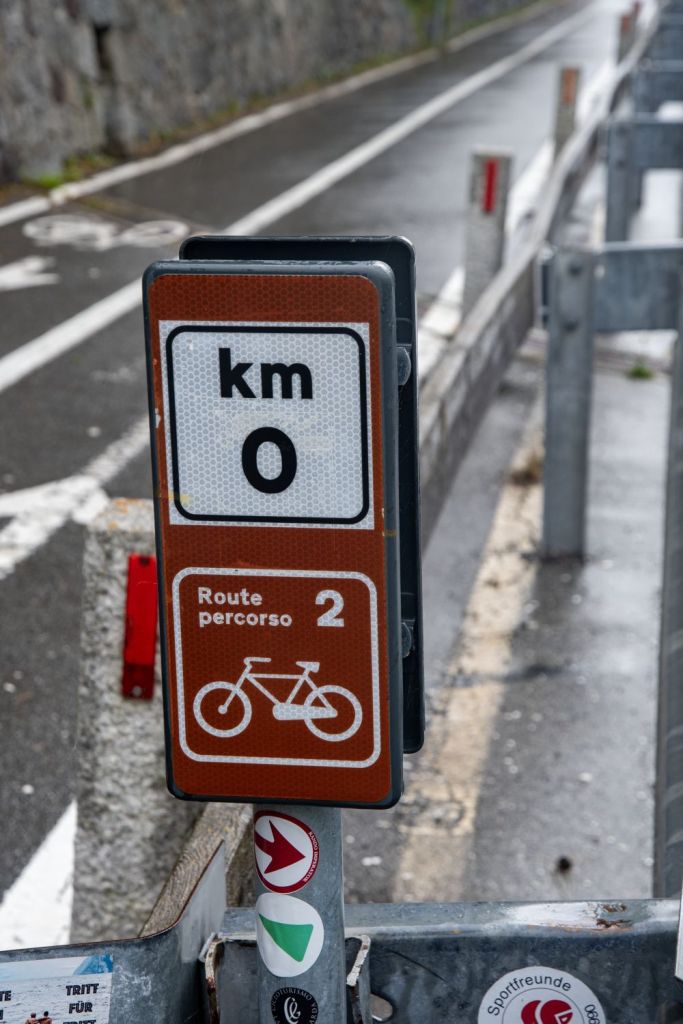
The border with markers and signs
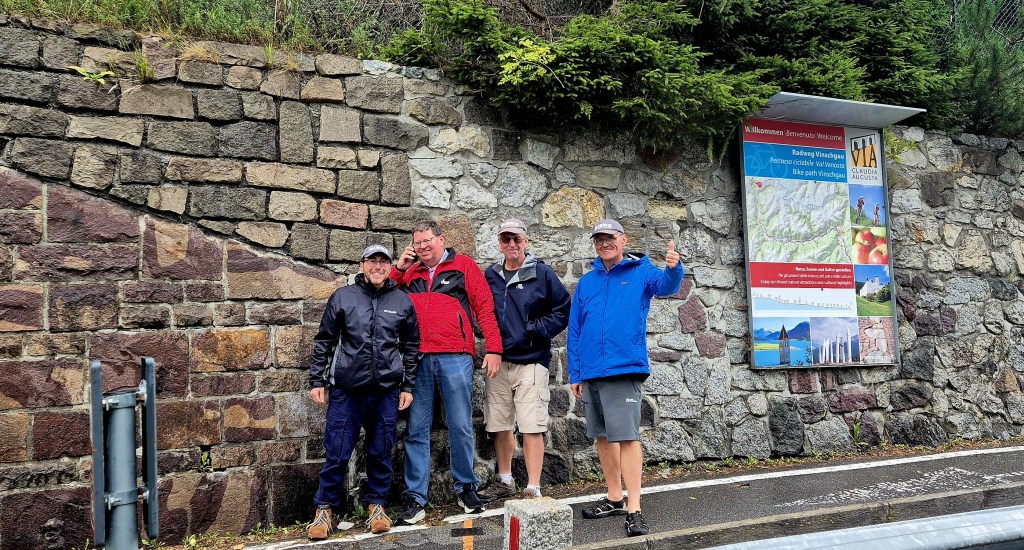
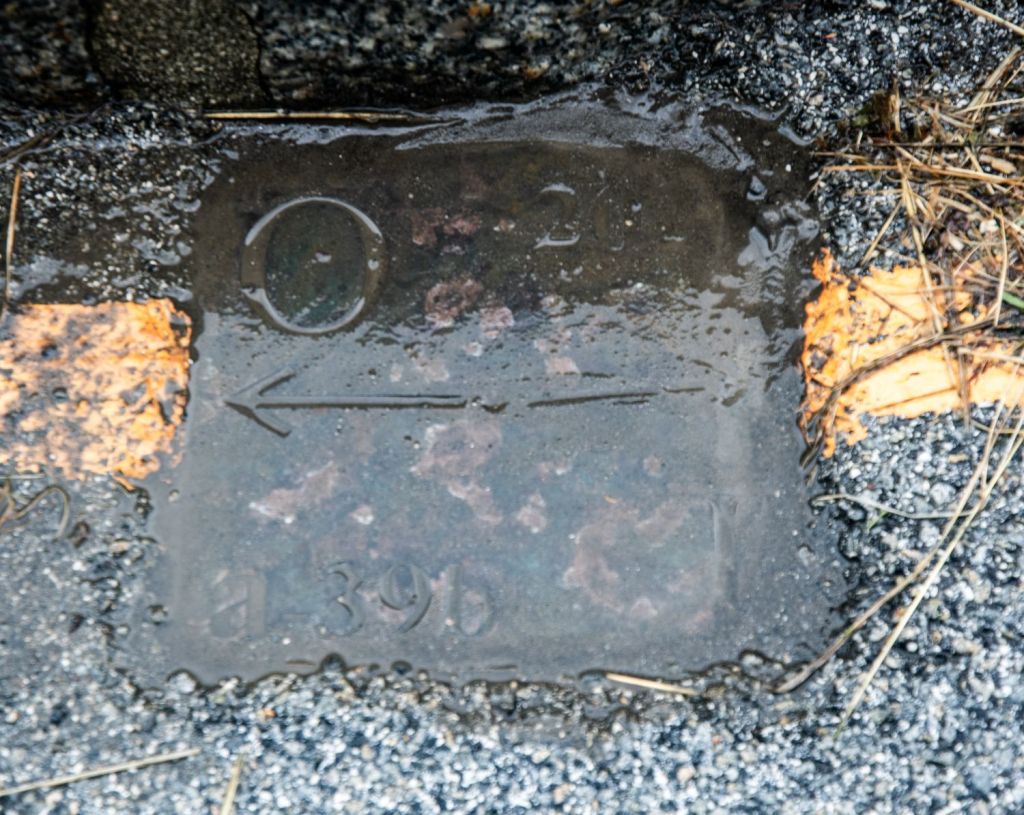
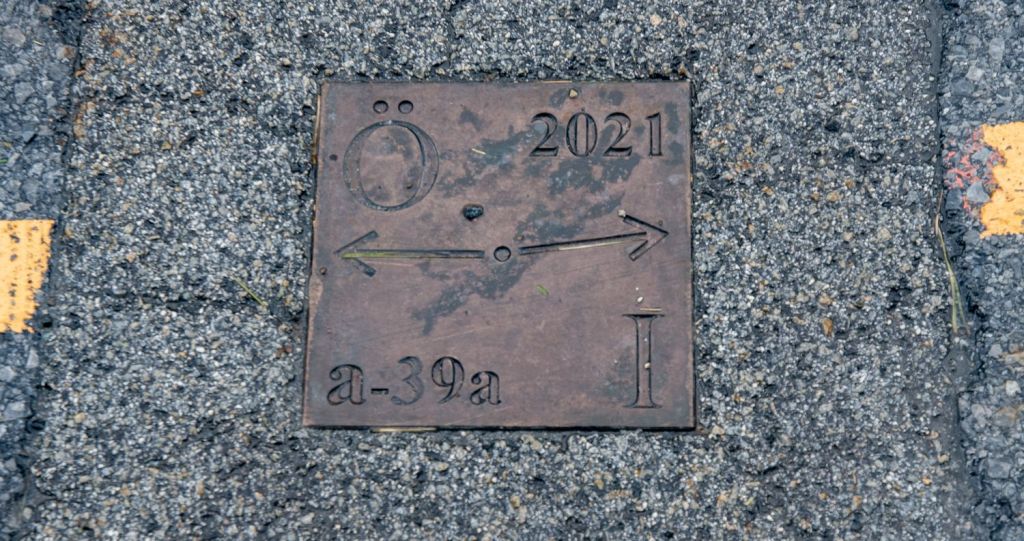
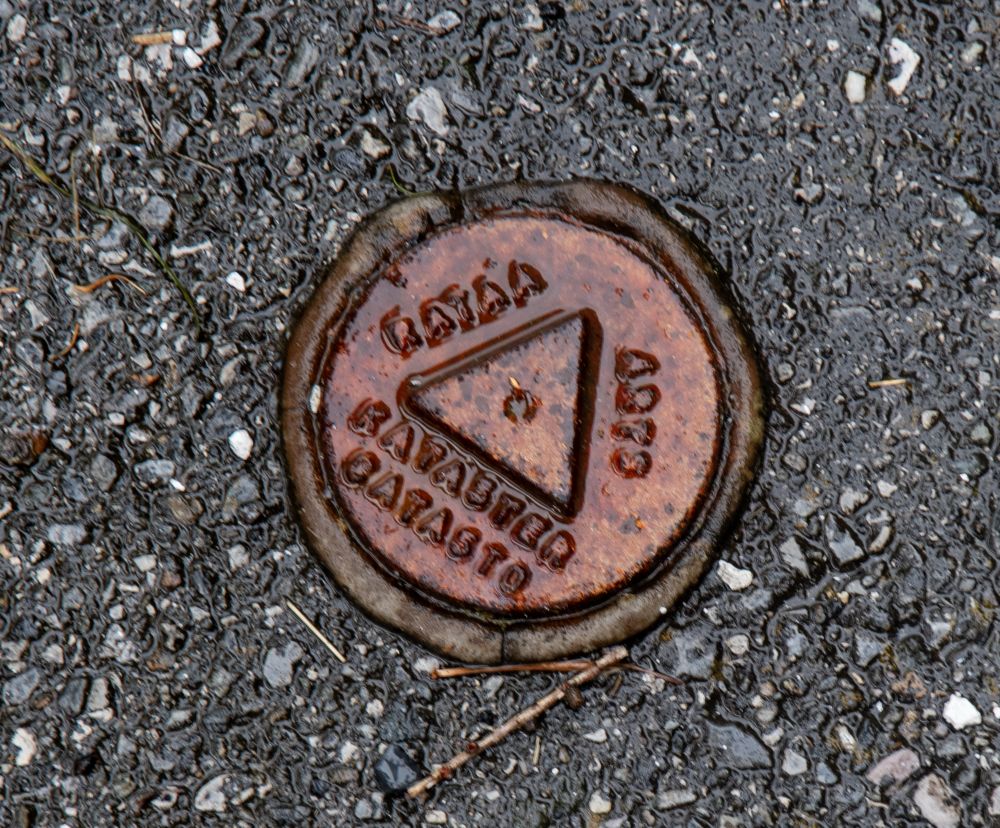
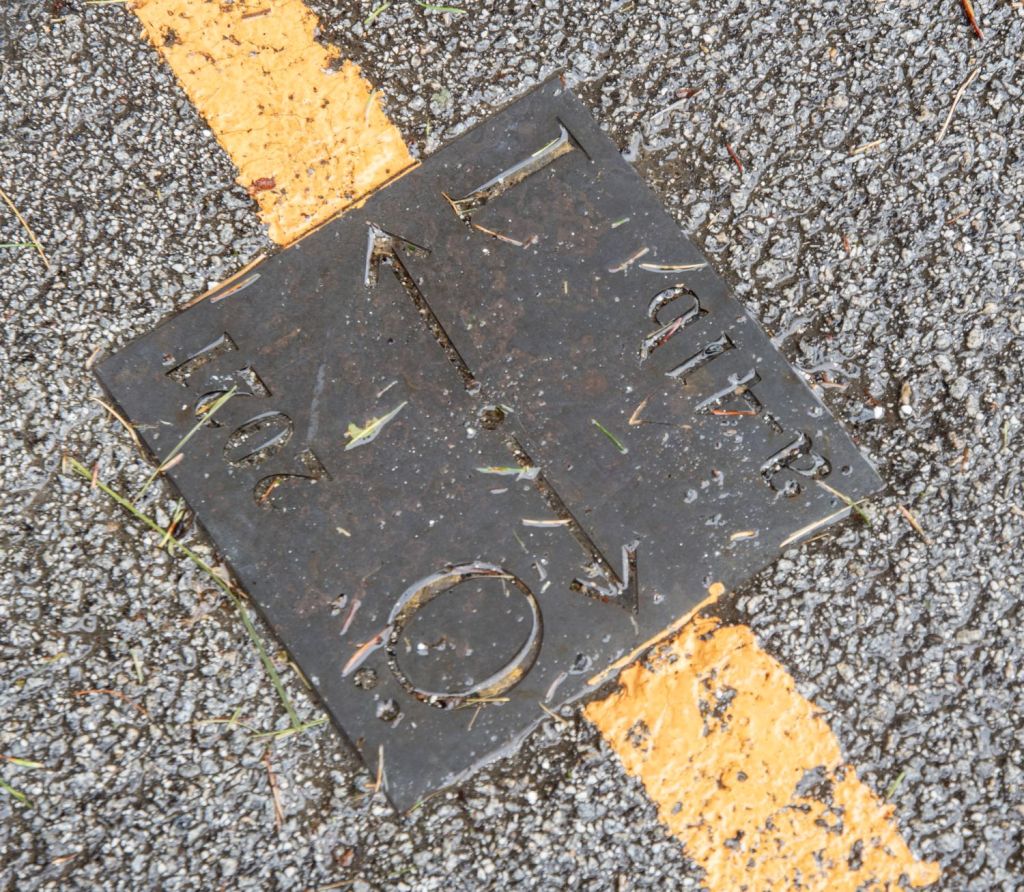
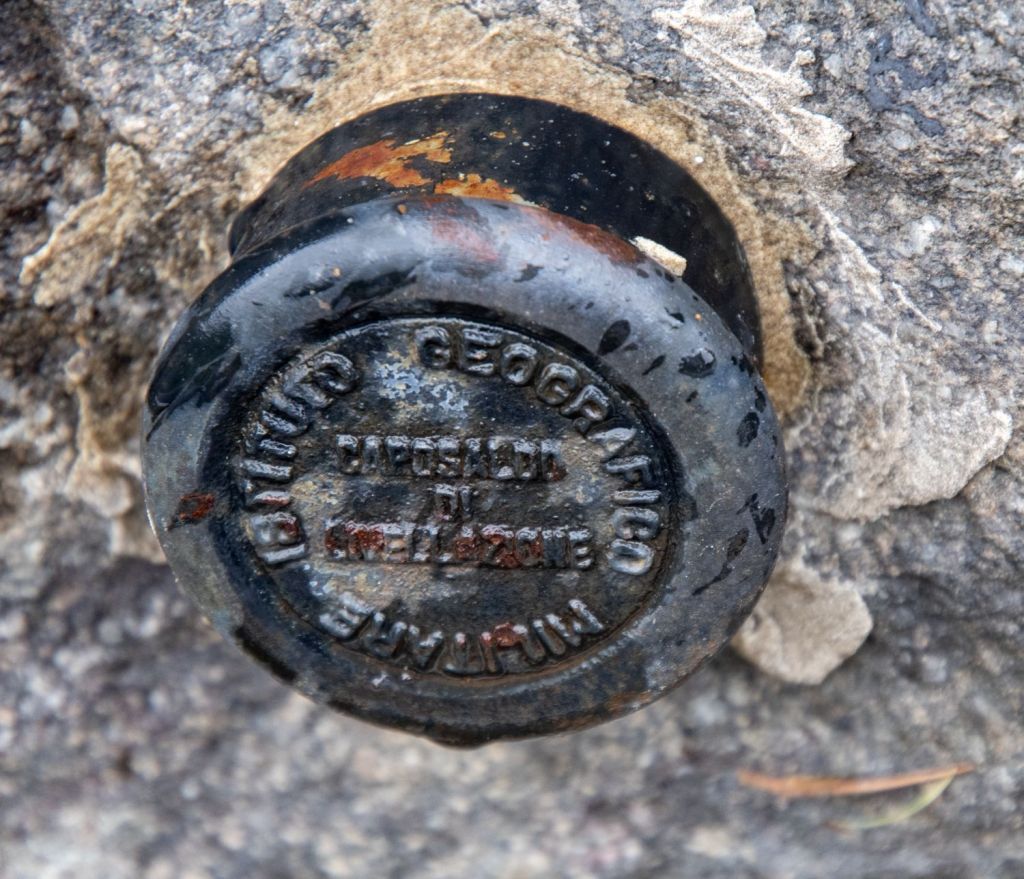
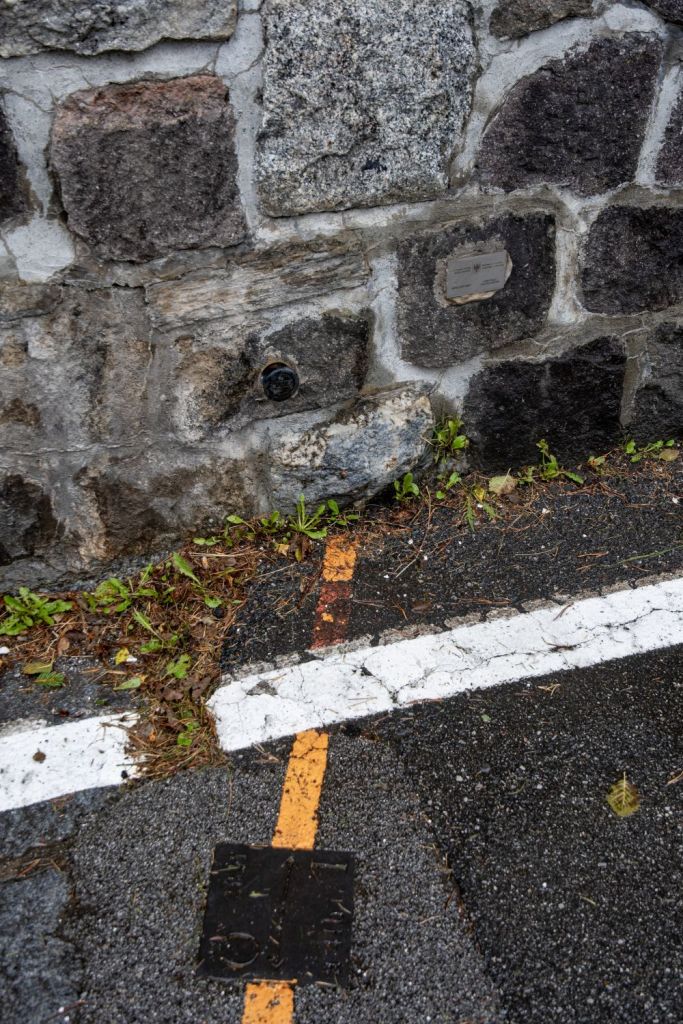
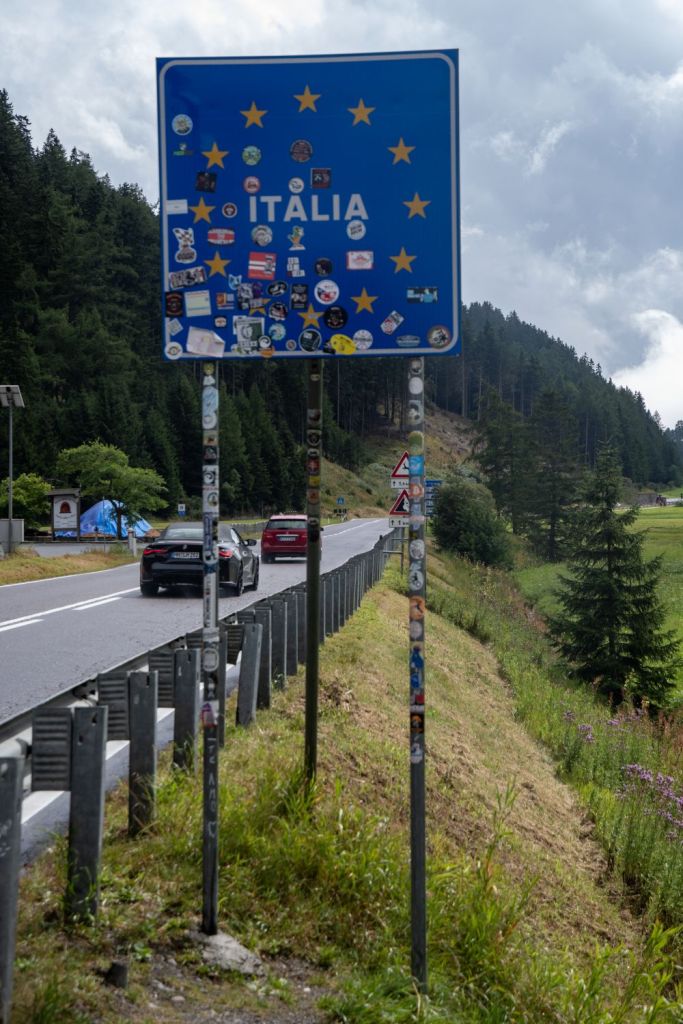
Italian Side
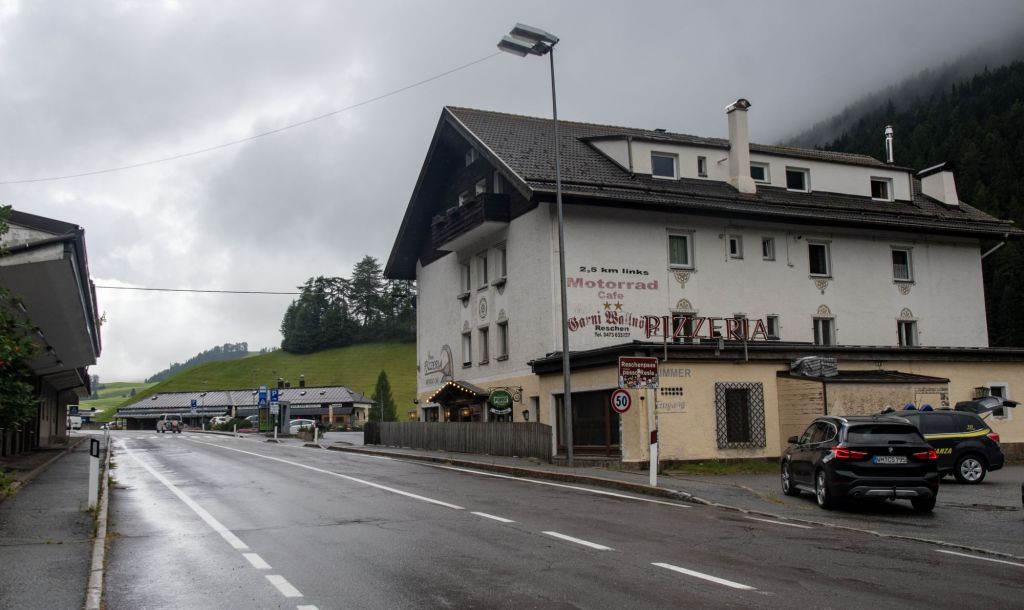
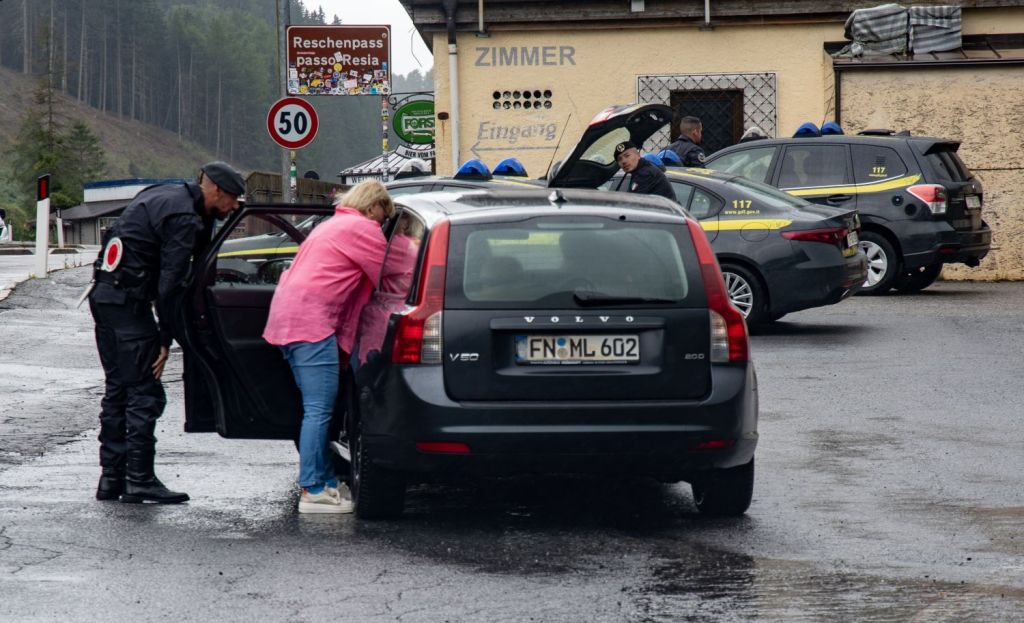
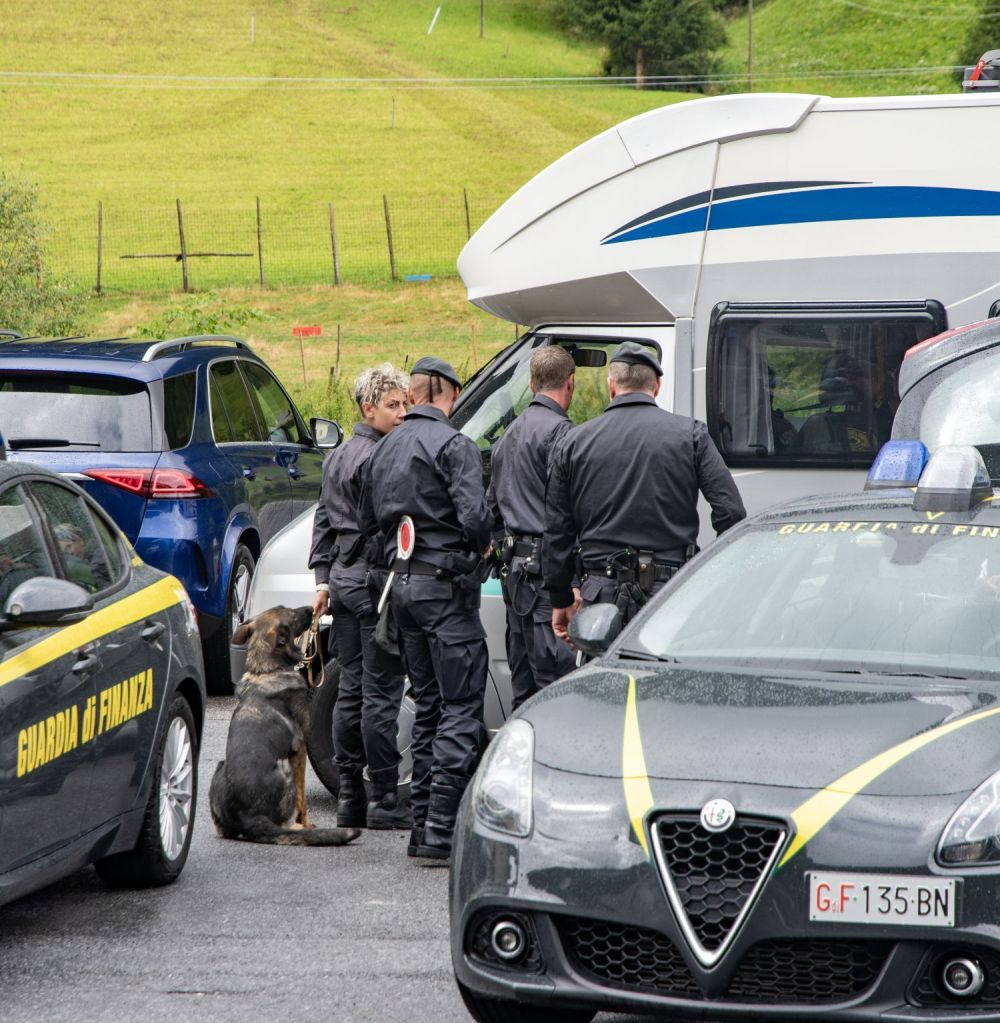
The border cuts through a car park and Italian customs were conducting vehicle inspections. These appeared to be quite rigorous with vehicle searches and officers with dogs.
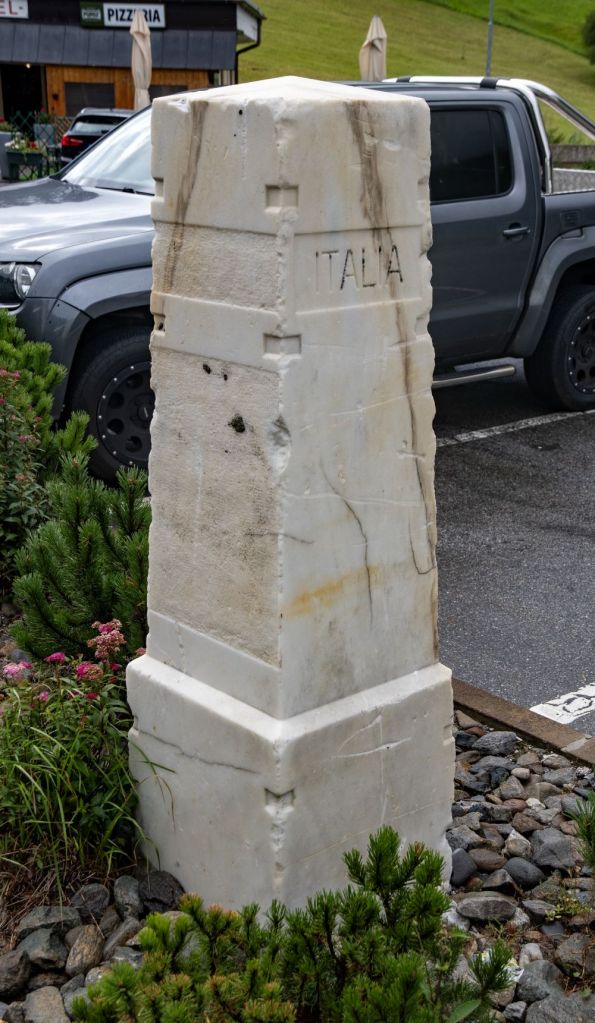
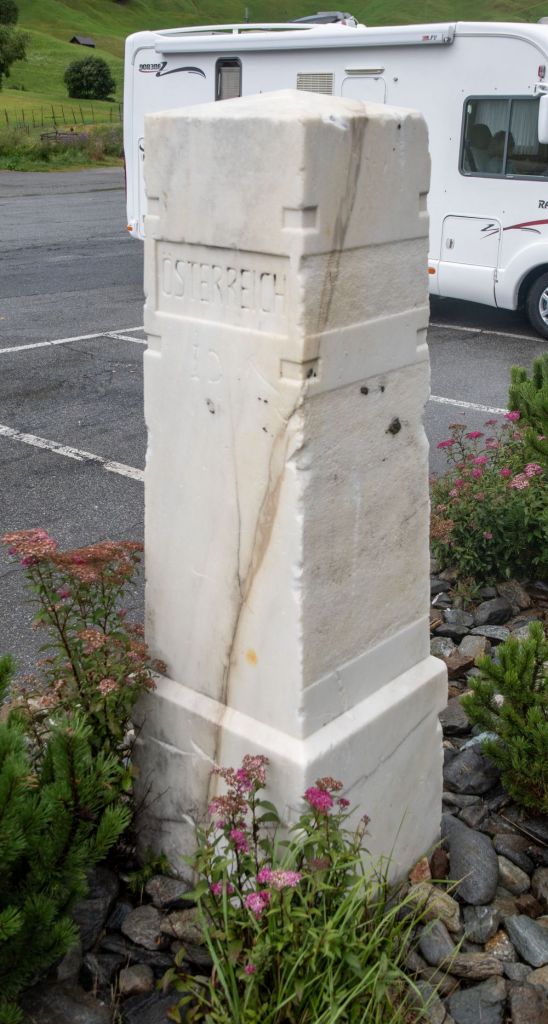
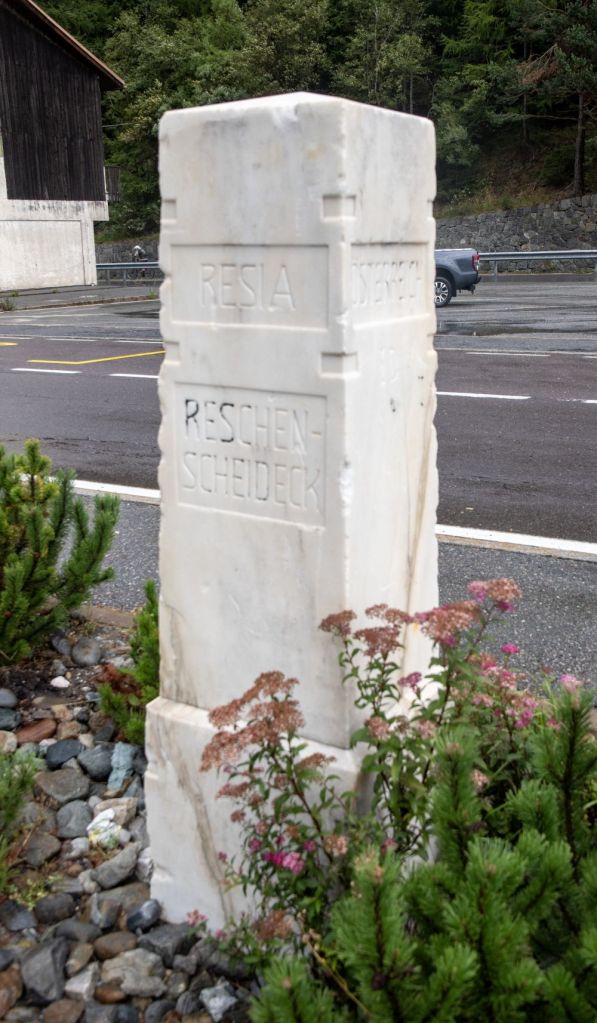
Historical border marker
This marker was approximately 100m from the actual border. The border stone separates the villages of Reschen and Nauders and lies on the main road. Coming from Austria, one side reads Italy, the other Austria. The border line is engraved on the stone. The border stone should actually bear the identifier a-37, which is missing instead, RESIA / RESCHEN is inscribed. The Treaty of Saint-Germain-en-Laye (signed 10 September 1919, effective 16 July 1920) marked a turning point in European history by formally dissolving the Austro-Hungarian Empire and altering its border with Italy. It separated South Tyrol from Austria, the border demarcation between Austria and Italy resulting from this treaty between 1920 and 1924, redefined the territorial affiliation of many places. The 2 localities agreed to maintain and restore the border stone and relocate it to its current position. Discussions are now underway regarding a new border survey, and the boundary stone is to be returned to its original position.

Date of Visit: 28 August 2025
 Barry's Borderpoints