

Our initial focus when exploring the border between Melilla and Morocco was the hard border defenses. The Melilla border fence forms part of the Morocco–Spain border in the city of Melilla, one of two Spanish cities in north Africa. Constructed by Spain, its stated purpose is to stop illegal immigration and smuggling. Melilla’s border and its equivalent in Ceuta, also bordering Morocco, are the only two land borders between the European Union and an African country

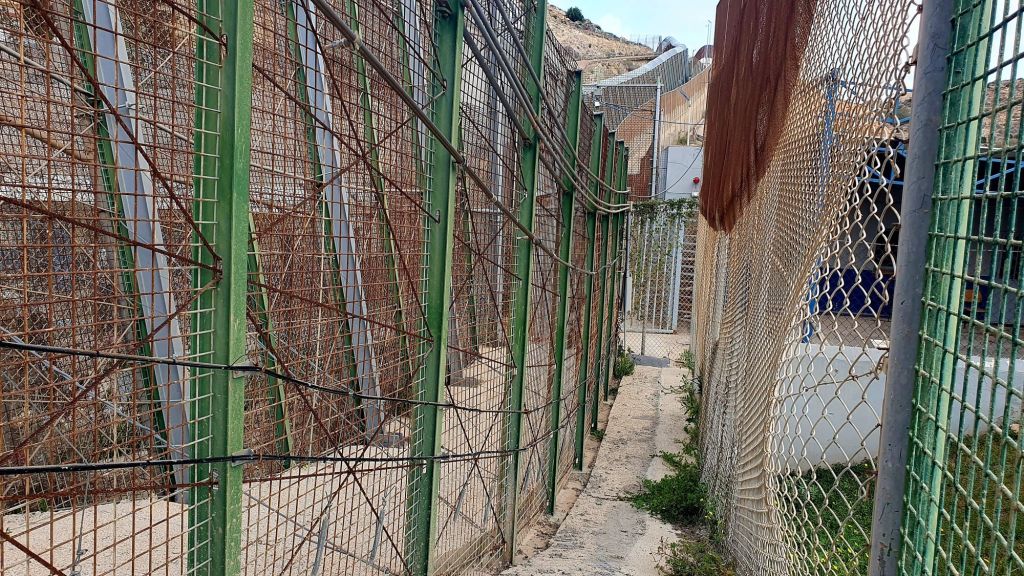
The barrier between Spain and Morocco, consists of a triple Spanish fence. The fence is approximately 11 km long. The triple fence was doubled in height in 2005 to 6m. It has watch towers, access roads, and a range of surveillance equipment. On the Moroccan side of the border, there are a further 2 fences, set back from the border and earthworks and ditches to prevent access. The Spanish side have mobile patrols whereas the Moroccan side have fixed observation points.
This border-fence structure is located on Spanish territory and its supervision, including the operation of its gates, remains under the exclusive control of Spanish authorities at all times. Spain acknowledges that its territory includes the border-fence structure. The EU, Spain, and Morocco cooperate closely on border control, a partnership that grants political and economic favors to Morocco for assisting the EU with the protection of its borders from irregular entry. Through this partnership, the EU delegates the responsibility for third-country nationals in search of protection to countries at its external borders to Morocco.
Prior to arriving in Melilla we had identified 2 border crossings however when we travelled along the length of the border, we identified 2 further border crossings. Border crossings are sensitive areas. At 2 of the four crossings we were challenged by law enforcement officials, on both sides of the border. We visited these points as part of the IBRG MOMEX-24 expedition.
Melilla -Mariguari border crossing is the northernmost border crossing. There are 4 crossing points between Melilla and Morocco. Only the one at Beni Ansar is open however. The other crossings were closed due to COVID and have not reopened. Originally this small crossing point was used by locals and school children. Local citizens of Nador can enter Melilla, although this entitlement has been subject to increased restrictions. It is important to note that although the autonomous cities of Ceuta and Melilla are officially considered part of the Schengen Area there are a few unique rules regarding travel to and from Ceuta and Melilla. These include document checks when departing from the cities when travelling to other parts of the Schengen Area. This means that technically, international travellers arriving in Ceuta or Melilla from a non-Schengen state have not yet arrived in the European free movement zone. As a UK passport holder I was checked prior to arriving and when leaving.

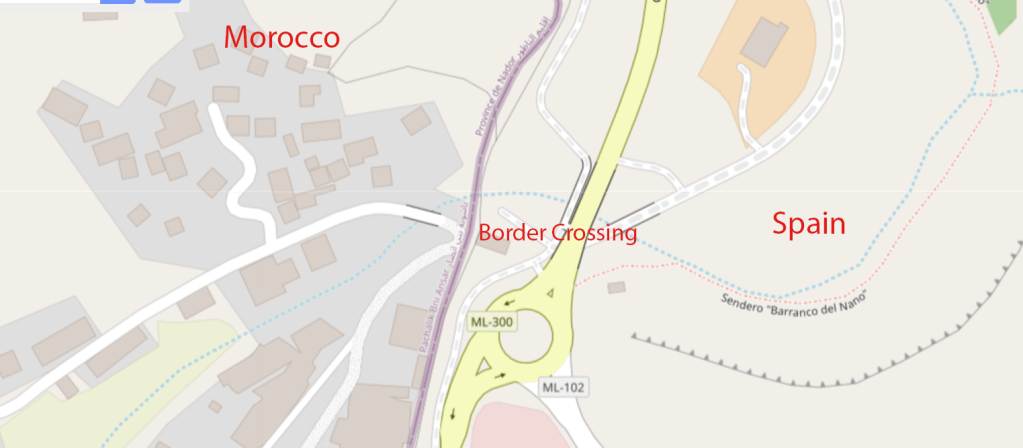
From the Spanish side.
It was very easy to access the crossing point, with it just being off the main road that follows the border north to south. Within 5 minutes of arriving a Guardia Civil vehicle with 2 officers stopped and we were questioned why we were there.


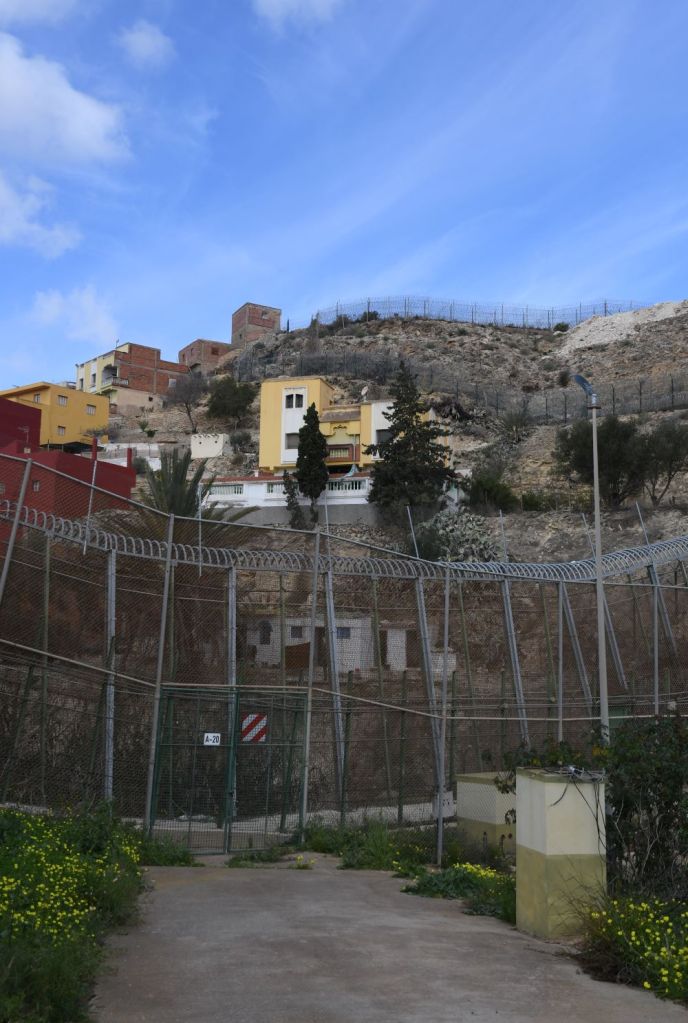


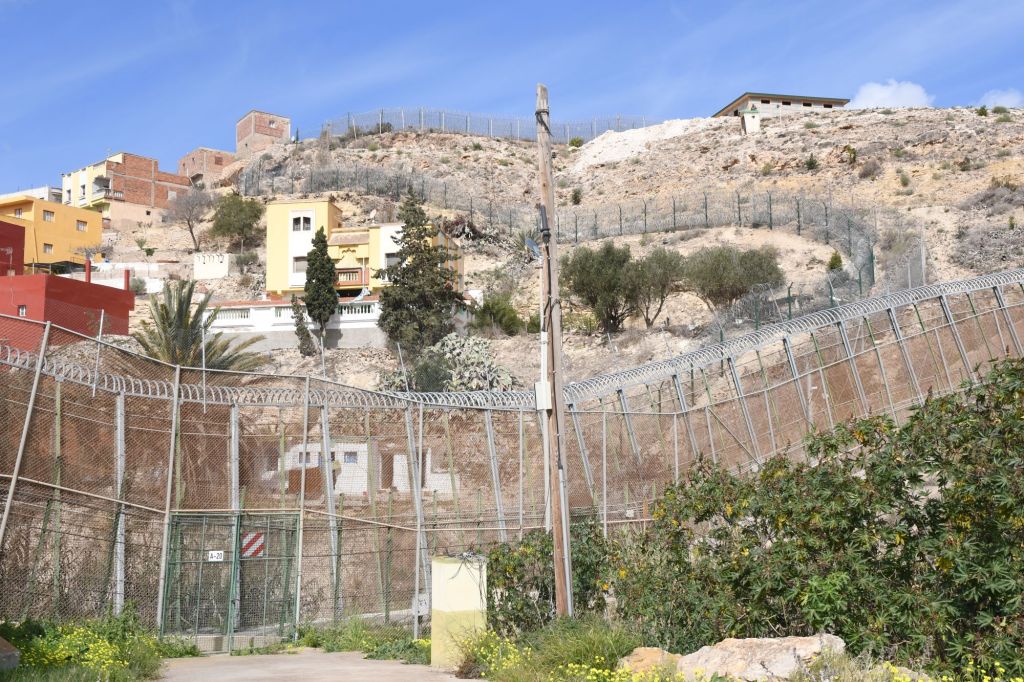
Moroccan side of the border
We took the opportunity of visiting the 4 border crossings from the Moroccan side. This one was not easy to photograph as the narrow road led directly to the crossing where there were Moroccan Police and Army personnel. A vantage point allowed a safer viewpoint with no interaction with any law enforcement personnel.

Other Border Crossings between Melilla and Morocco.
Please click on the images below for maps, photos and detailed reports of the other 3 border crossings.



Date of Visits: 5 and 8 March 2024
 Barry's Borderpoints