
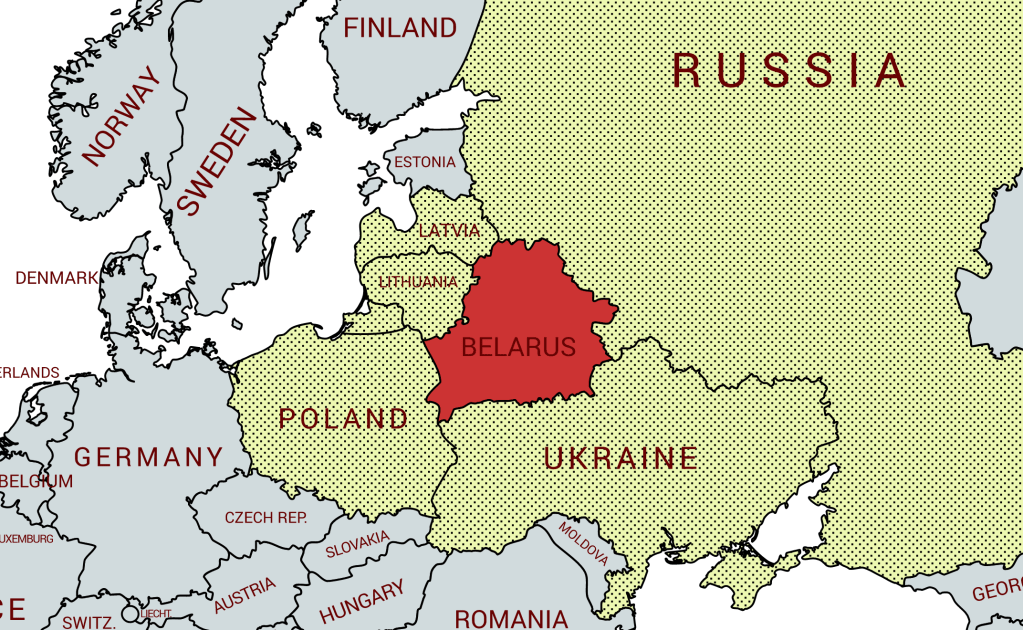

Belarus; (Belarusian: Беларусь) is a landlocked country in Eastern Europe. It is bordered by Russia to the northeast, Ukraine to the south, Poland to the west, and Lithuania and Latvia to the northwest. Belarus did not exist prior to 1917 being part of the Grand Duchy of Lithuania, the Polish–Lithuanian Commonwealth, and the Russian Empire. Despite declaring independence in 1917 it was annexed by the Soviet Union in 1922 after losing much of its territory following the 1919 -1921 war between Poland and the Soviet Union. It’s current borders date from 1945.
Belarus declared independence following the collapse of the Soviet Union in 1990, achieving independence in 1991. Belarus is a member of the United Nations since its founding, the Commonwealth of Independent States, CSTO, EEU, and the Non-Aligned Movement.
Belarus is an authoritarian, restrictive society, with limited freedoms when associated with its neighbours in the EU. Lukashenko has been elected President since 1994. Since 2014, Belarus has begun to distance itself from Russia which it historically had very close ties.
Border Facts: Belarus has 3642 km of land borders, which are shared with Russia, the Ukraine, Lithuania, Poland, and Latvia.
Belarus- Russia Border: is the longest shared border of Belarus being 1312 km long. The border was established in 1991. In 2011 Belarus and Russia formed a customs union and checks ceased on the border, although passport checks were sometimes undertaken. With Belarus introducing visa free travel to EU citizens in October 2016 Russia reestablished passport controls on the border. This has caused problems as some crossings have no control facilities and therefore it is necessary to enter Russia and exit Belarus at a designated crossing point.
Belarus – Ukraine Border: is 975.2 km long including 325.9 km by rivers. It starts from the BYPLUA tripoint to the west on the River Bug and stretches to BYRUUA in the east.
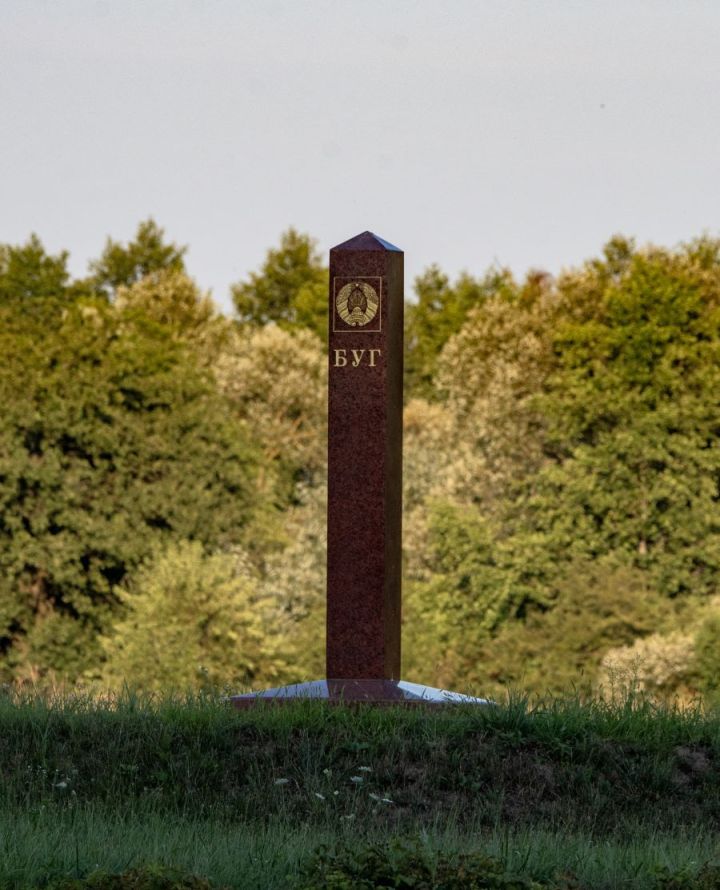
Part of this area was contaminated after the Chernobyl disaster. It dates broadly from 1918. When both countries were part of the Soviet Union it was less significant than today. The border as is was formally confirmed in 1990 between the 2 republics and again as independent countries in 1993.
On 24 February 2022, during the 2022 Russian invasion of Ukraine, Russian troops began moving across the border from Belarus into Ukraine as a part of the Kyiv offensive. This land was reclaimed 2 months later and in November 2022 Ukraine began the construction of a border wall with Belarus.
Belarus – Lithuania Border: The relationship between Lithuania and Belarus dates back to the period when they were both parts of the Grand Duchy of Lithuania.

Both nations would later be part of the Russian Empire and the Soviet Union. The Belarus–Lithuania border is an international border almost 679 km in length between the Republic of Belarus (CIS member) and the Republic of Lithuania (EU member) and also serves as an outer border of the European Union and the western border of the Commonwealth of Independent States.
The border is defined by the treaty of February 6 1995 between the two countries. The ground demarcation of the border was completed in 2007. Since 2004 the border has served as the outer border of the European Union and since 2007, the Schengen Area.
The border starts at the tripoint BTLTLV and crosses through several physical features such as River Apyvardė, Lake Apvardai, and the Dysna River, it ends at the BYLTPL tripoint.
Belarus – Poland Border: The border is 418 km long, the border begins in the south, at the tripoint formed with the Belarus-Poland-Ukraine borders BYPLUA. The river Bug forms the first third of the border, which is similar to the Curzon Line. It ends in the north, with the intersection of the borders of Lithuania, Poland and Belarus. The border is heavily monitored as an external EU/Schengen border. On 25 January 2022, Poland began building a border wall on the border with Belarus to prevent illegal immigration in the aftermath of the Belarus–European Union border crisis, the barrier was completed on 30 June 2022.
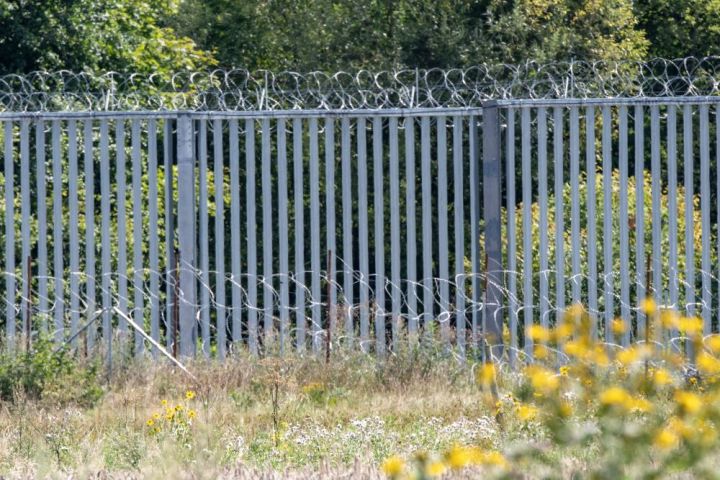
An electronic barrier 206km in length mounting 3,000 cameras with night vision and movement sensors, was added to the fence between November 2022 and early summer 2023 at a cost of EUR 71.8 million.
The border runs along the administrative borders of two Voivodships Podlaskie and Lubelskie in the Polish side and Grodno and Brest Vobłasć in the Belarusian side.
Belarus – Latvia Border: The Belarus – Latvia border is 172.9 km long. It spans from the tripoint with Lithuania to the tripoint with Russia. The current border between the republics of Belarus (CIS member) and Latvia (EU member) was established after the dissolution of the Soviet Union and confirmed in 1994 and again in 2013. For about 16.6 km, the border runs along the Daugava River. It also crosses the Lake Rychy and an island in the lake.
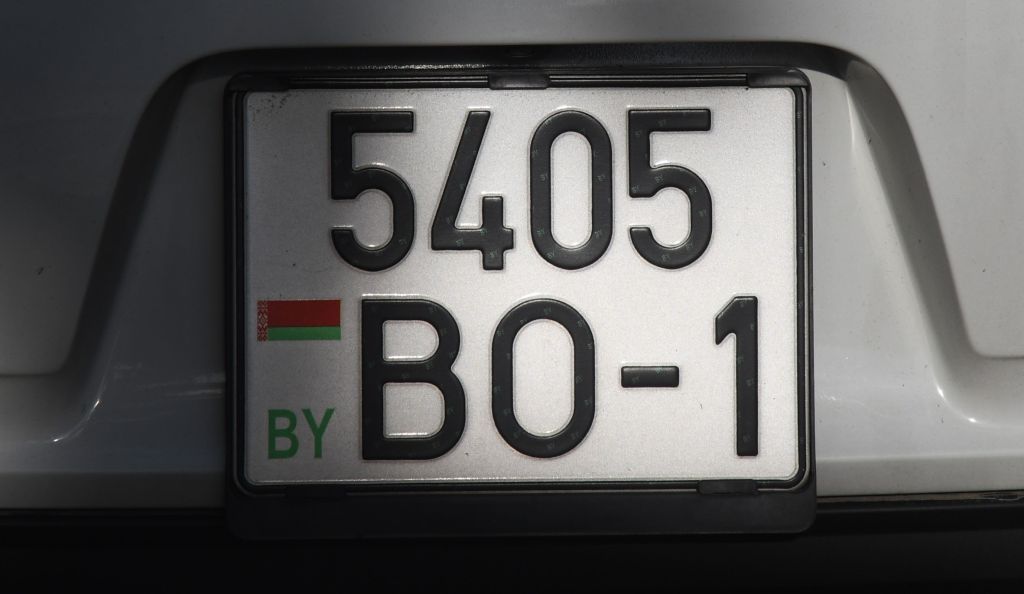
Belorussian Registration Plates

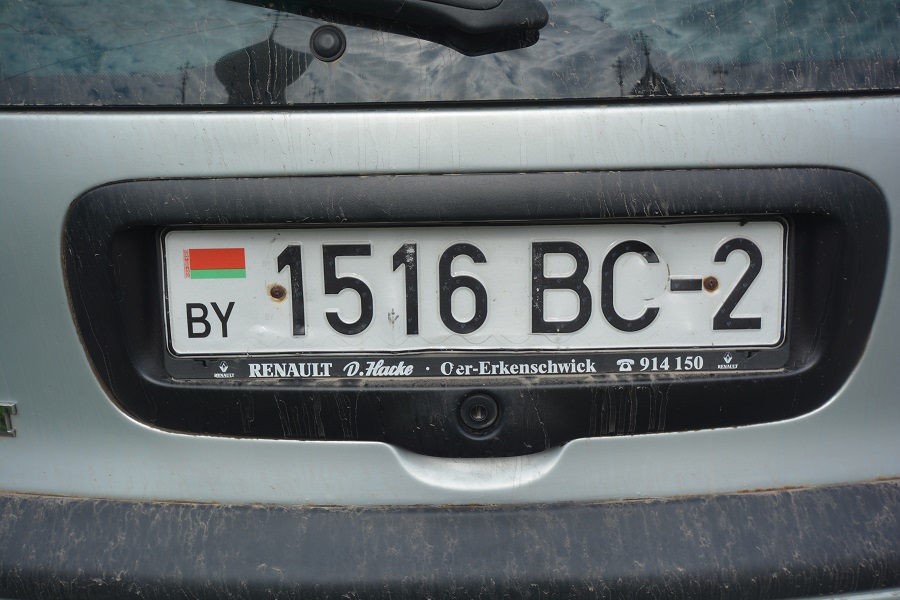
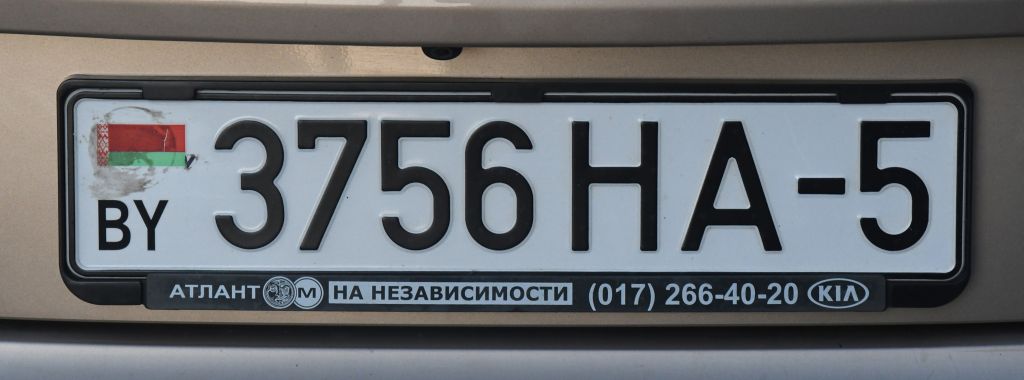
Belorussian Tripoints
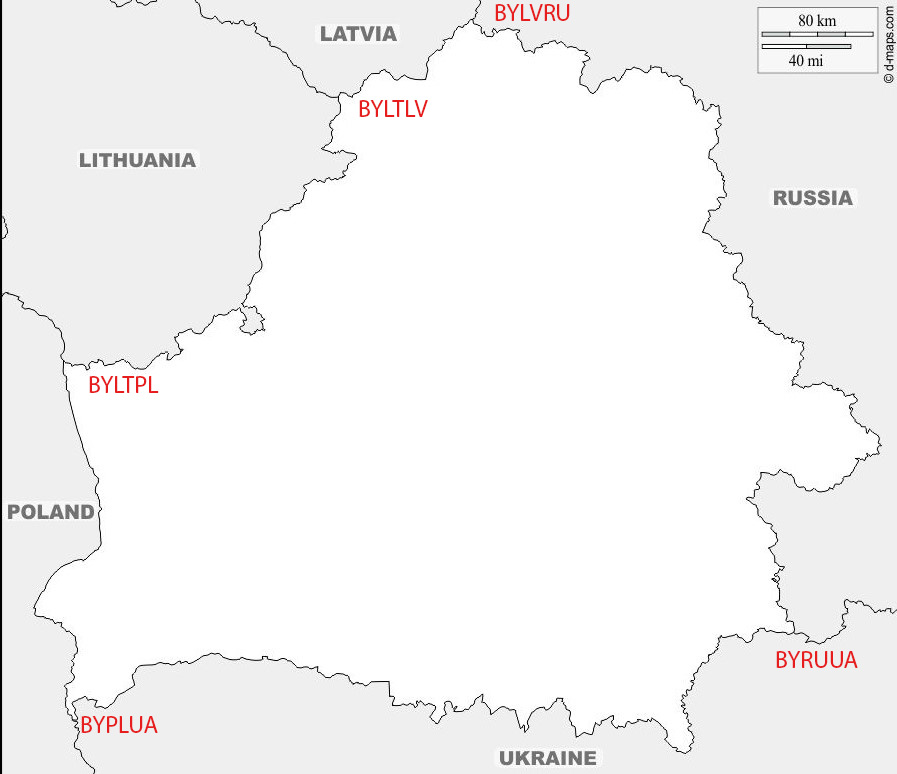
| Number | name | countries | Type | coordinates | NOTES/Links |
|---|---|---|---|---|---|
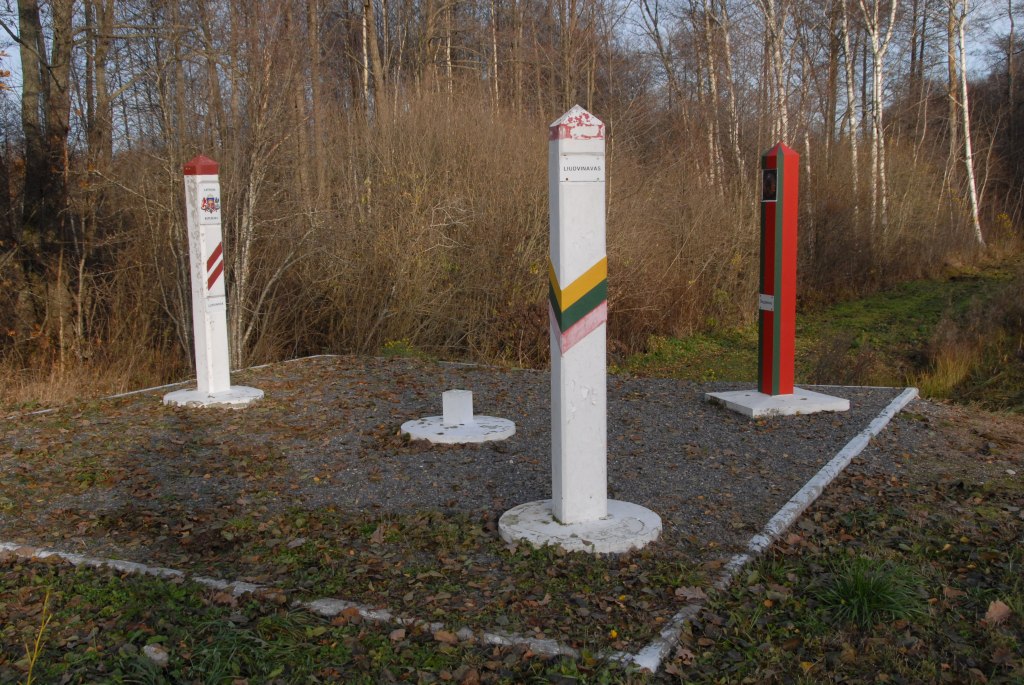
| 1 | BYLTLV | Belarus – Lithuania- Latvia | Dry | 55°40’50″N 26°37’49″E | The tripoint is named Liudevinova (BY), Ludvinova (LV) and Liudvinavas (LT) and is situated in a park on the Lithuanian side with sculptures and other artefacts. The tripoint itself is a 6 meter square platform with the 3 border markers (at approximately 45 degrees from the central marker representing the tripoint itself. On the platform is possible to walk between each country. Off the platform it is possible to walk between Latvia and Lithuania but not Belarus. Deeleman (2015) Krogh (2003) Wallis (2007) |
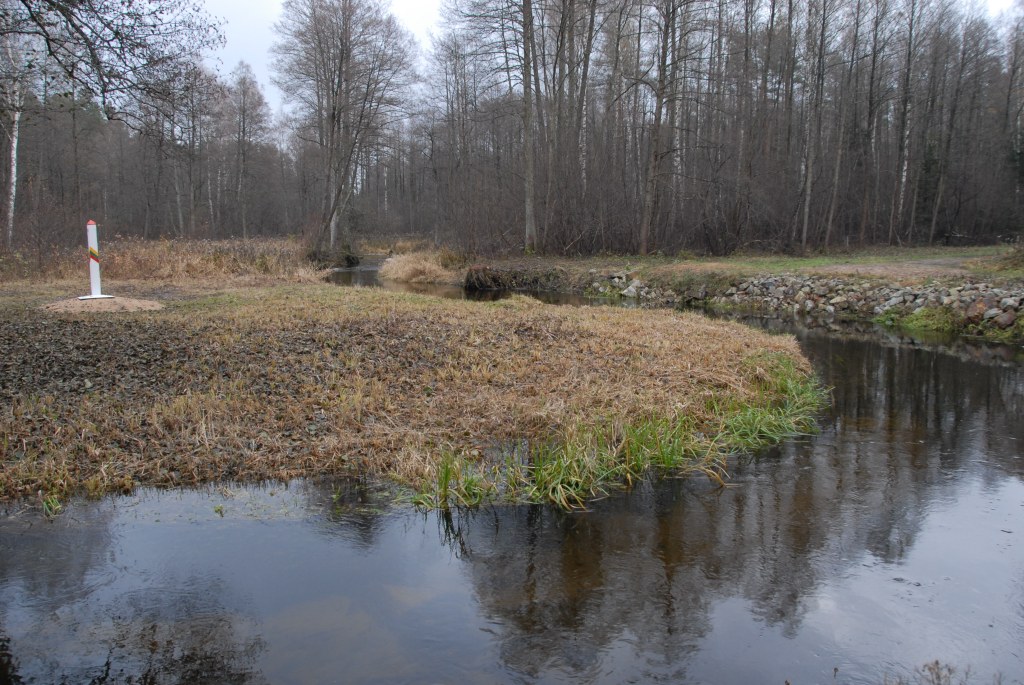
| 2 | BYLTPL | Belarus – Lithuania – Poland | Wet | 53°57’22″N 23°30’54,1″E | The tripoint is south of the Polish village of Stanowisko and can be approached from either Poland or Lithuania. The Mara river which marks the border curves at this point with a portion of Lithuania protruding towards the other 2 countries. There are 3 BM#1789, 1 in each country. Deeleman (2015) Krogh (2003) Wallis (2007) |
| 3 | BYLVRU | Belarus – Latvia – Russia | Wet | 56°10’12″N 28°09’04″E | The tripoint is located at the confluence between a small creek and the Zilupe river. The are border markers in each country each marked with Neverica. There is a bridge crossing the river into Russia> BM#001 LVRU are on either side of the bridge. Slightly to the west there is a similar bridge leading from Latvia to Belarus. BM#001 BYLV are on either side. All the borders are well demarcated. Prior to Latvia becoming independent this was a joint festival area, and there are many monuments situated on either side. Since the invasion of Ukraine these bridges have been removed. Deeleman (2015) Krogh (2003) |
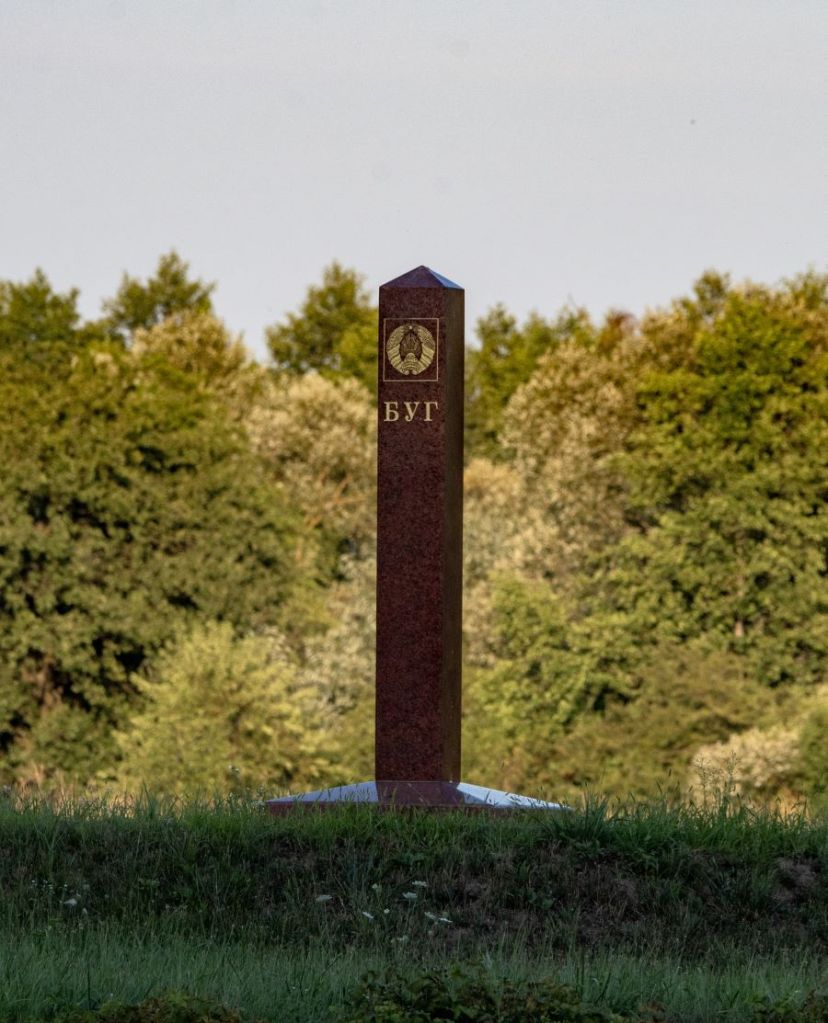
| 4 | BYPLUA | Belarus – Poland – Ukraine | Wet | 51°30’29″N 23°37’04″E | The tripoint is easily accessible from the Polish village of Orchówek, the tripoint is located at the intersection of a line running through the middle of the Bug River (Western Bug) with a line constituting an extension of the southern edge of the Mościcki Canal. There are 3 TP monuments, The UA segement was fortified with barbed wire and earthworks. PL/BY BM#001 visible Krogh Van der Giessen (2024) |
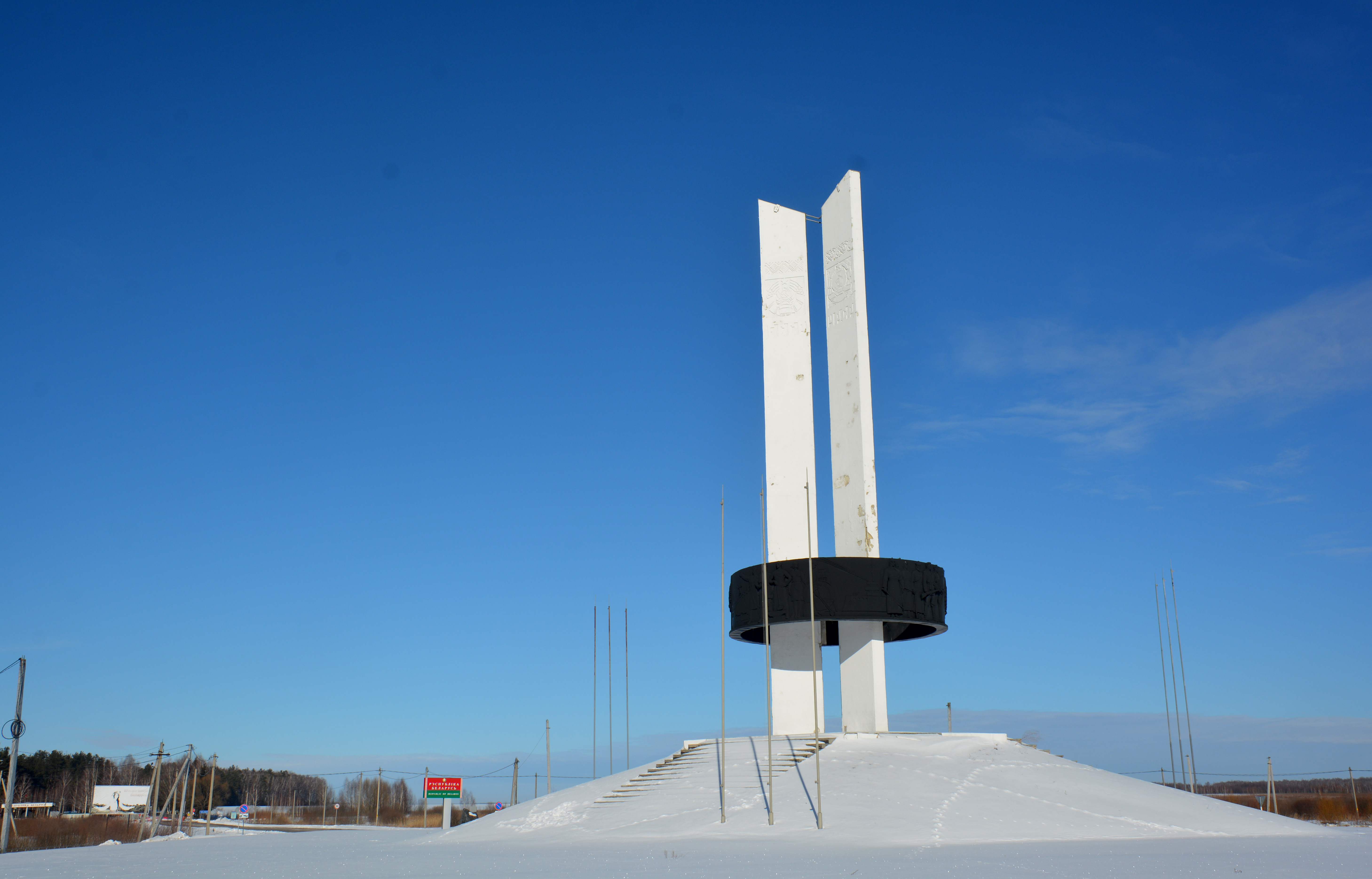
| 5 | BYRUUA | Belarus – Russia – Ukraine | Dry | 52°6’44″N 31°46’53″E | The tripoint is located at Senkivka and is marked by the Three Sisters monument which symbolises the friendship of peoples. Visited from UA. 3 border crossing points close together. Several border markers and national signs. My favourite tripoint. In 2024 the monument is likely to be dismantled following the Russian invasion of Ukraine. Krogh (2012) |
Tripoint Gallery
Site Navigation
In order to find your way around the site, either click on the links (text in red) or use the menus at the top and side of the pages. About leads you to the main areas of the site. The European Tripoints menu leads directly you to my visit reports whereas the Country Visits page allows you to choose which country to look at first.

Mobile Users Advice
Tables display correctly when holding your mobile horizontally.
To access the links to other pages please click on the 3 horizontal dots at the bottom of the page.
 Barry's Borderpoints