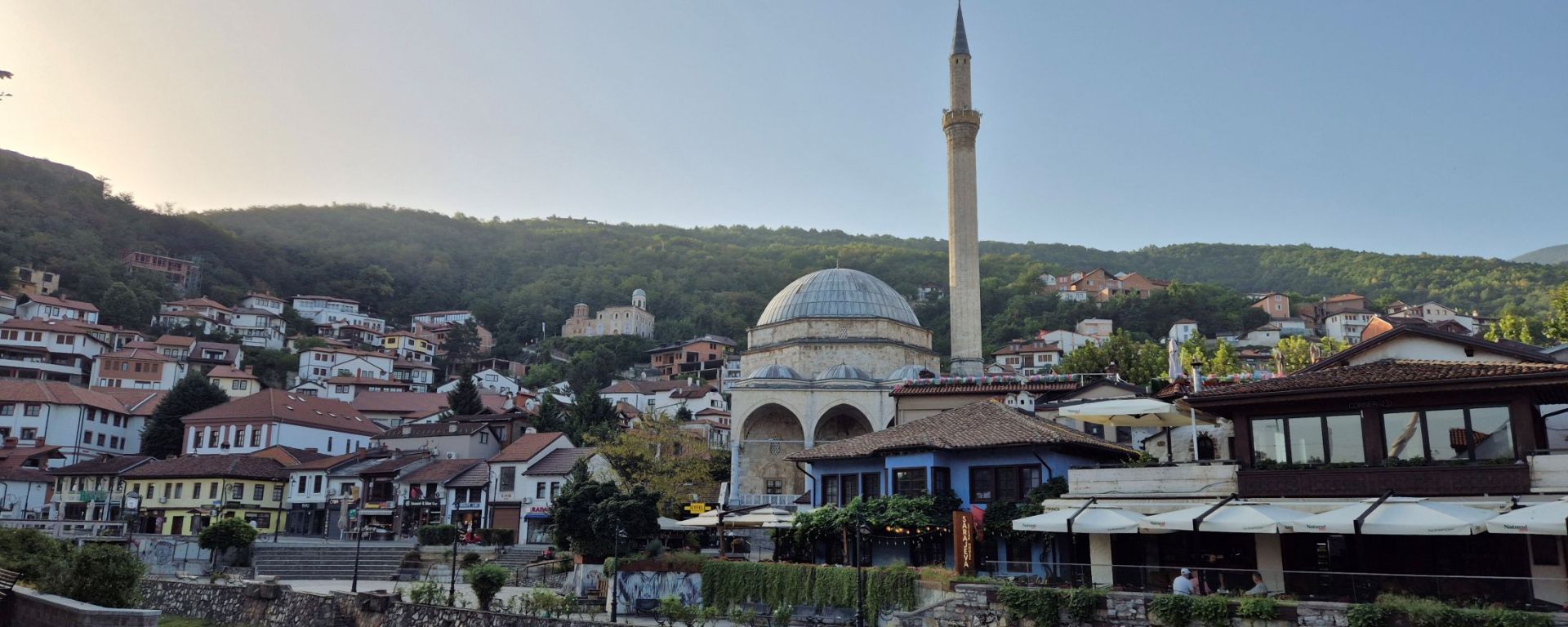
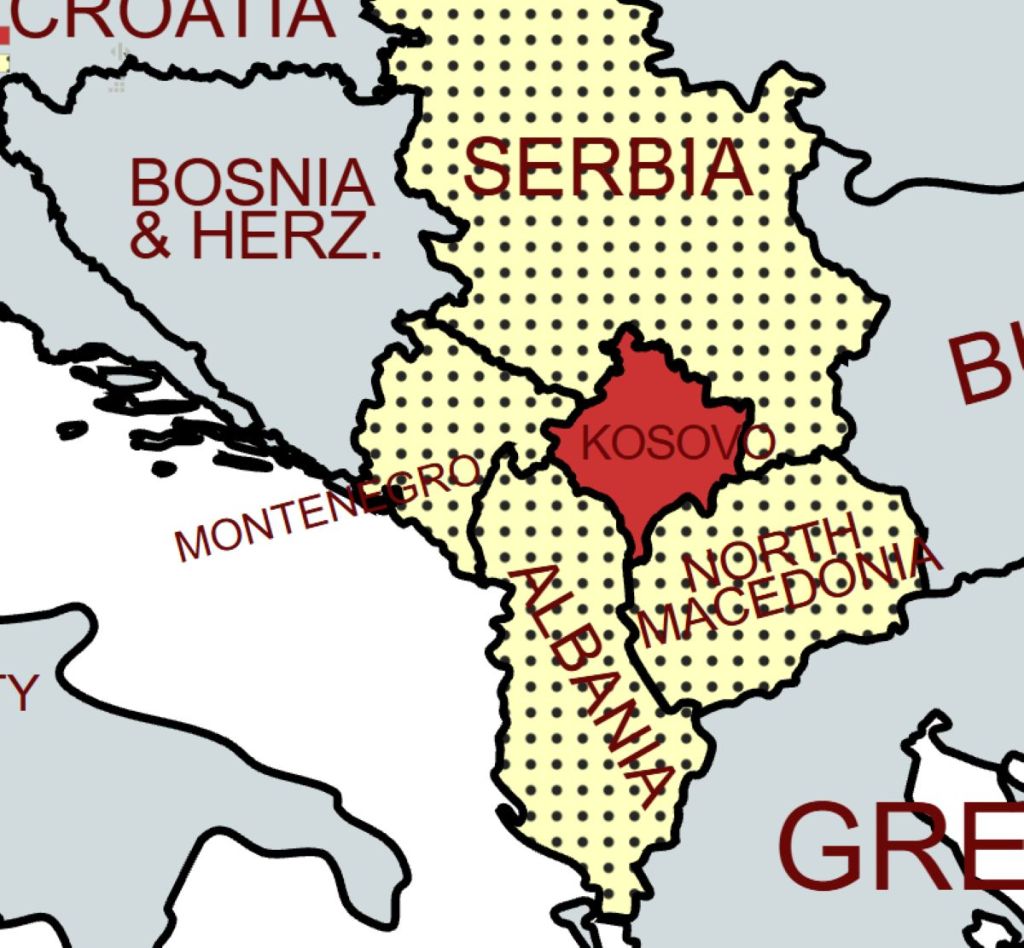
Kosovo, officially the Republic of Kosovo, is a landlocked country in Southeastern Europe with partial diplomatic recognition. It is bordered by Albania to the southwest, Montenegro to the west, Serbia to the north and east, and North Macedonia to the southeast. It covers an area of 10,887 km2 and has a population of nearly 1.6 million, of whom the vast majority (approximately 92%) are ethnic Albanians. For most of the 20th century, it was a part of Yugoslavia.
The 20th century was characterised by Kosovo struggling to exist, amid shifting borders, intense demographic changes, and severe ethnic conflict between its dominant Albanian majority and the controlling Serbian authorities. Throughout this period, Kosovo repeatedly shifted political hands, enduring a cycle of suppression, short-lived autonomy, and eventual war. Serbian colonisation and repression was an ongoing feature of this period.
Tensions between Kosovo’s Albanian and Serb communities simmered during the 20th century and occasionally erupted into major violence, culminating in the Kosovo War of 1998 and 1999, which resulted in the Yugoslav Army’s withdrawal and the establishment of the United Nations Interim Administration Mission in Kosovo. KFOR (Kosovo Force) is a NATO-led international peacekeeping military force established in Kosovo. The mission was launched on 11 June 1999 following a 78-day NATO air campaign and the signing of the Military Technical Agreement. It operates under the authority of United Nations Security Council Resolution 1244.
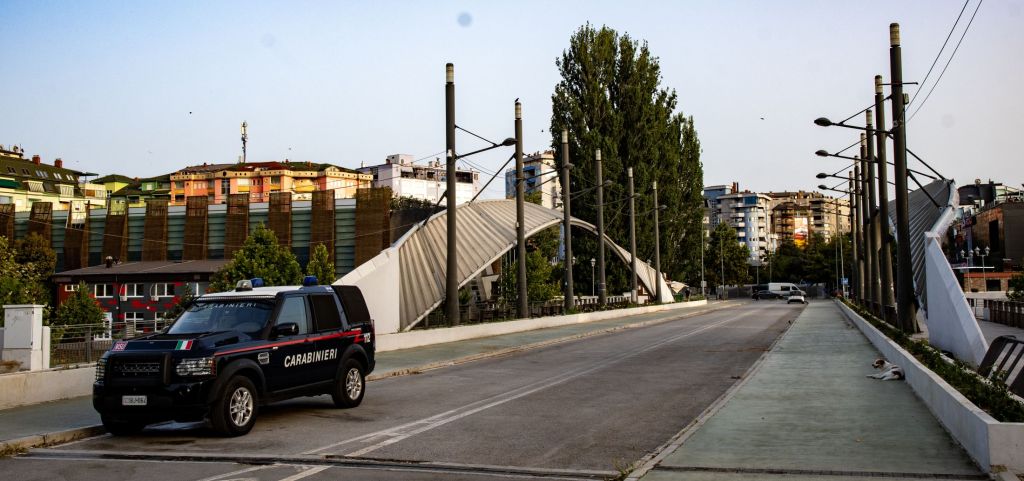
Borders exist within Kosovo too. The Mitrovica Bridge (Ibar Bridge) crosses the Ibar River in Mitrovica, linking South Mitrovica (predominantly Albanian) and North Mitrovica (predominantly Serb). It is open to pedestrians but not traffic.
It has become a well-known symbol of ethnic division, post-conflict tension, and political negotiations in Kosovo, and is regularly patrolled by international peacekeepers (KFOR and the Carabinieri). The city was formally split into two separate municipalities (South Mitrovica and North Mitrovica) in 2013.
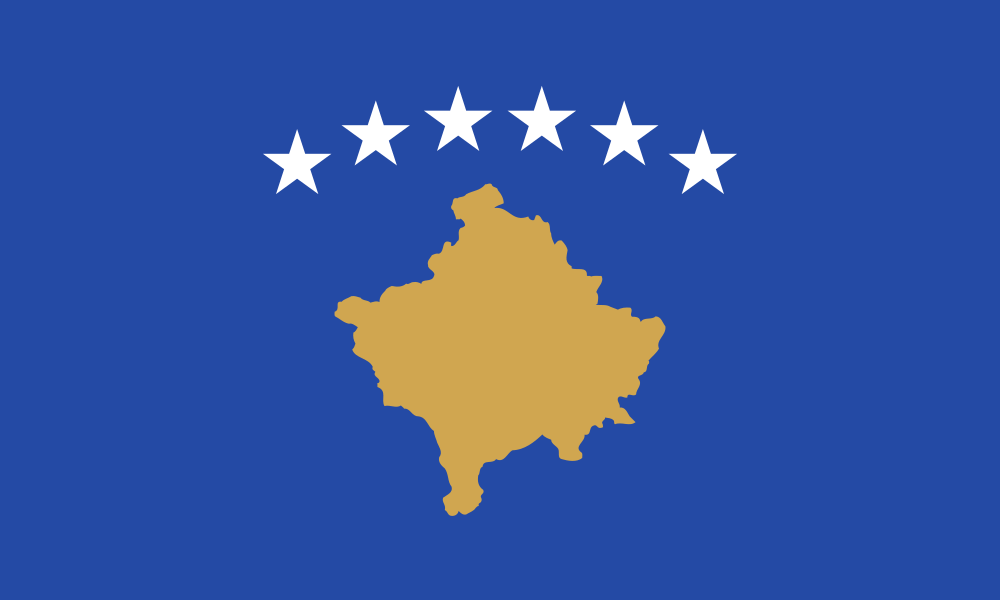
Kosovo unilaterally declared its independence from Serbia on 17 February 2008 and has since gained diplomatic recognition by at least 110 member states of the United Nations. Serbia does not officially recognise Kosovo as a sovereign state and continues to claim it as its constituent Autonomous Province of Kosovo and Metohija; however, it accepts the governing authority of the Kosovo institutions as part of the 2013 Brussels Agreement.
Kosovo is a unitary parliamentary constitutional republic governed by central and local institutions. Executive power is held by the Prime Minister (head of government) and a cabinet, while the President serves as head of state. Legislative power rests with a unicameral Assembly of 120 members. Local Government is organised through 38 basic administrative units led by a directly elected mayor and a municipal assembly. Municipalities with a majority Serb population hold specific local competencies regarding health, education, and cultural protection. Kosovo is a full member of several major international financial and regional bodies—including the International Monetary Fund, the World Bank, and the European Bank for Reconstruction and Development.
However, it remains blocked from joining global heavyweights like the United Nations, NATO, and the European Union due to contested international recognition. Kosovo is an official potential candidate for European Union membership. Guided by the Stabilisation and Association Agreement, Kosovo receives financial support under the EU Growth Plan (totaling up to €882.6 million), though full recognition is still withheld by five EU member states.
Border Facts
Kosovo does not have an official, formally assigned ISO 3166-1 country code as it is not recognised by the UN. However, the unofficial user-assigned code XK (alpha-2) and XKX (alpha-3) are widely used de facto by international organizations, the European Commission, and financial institutions. An alternative legacy code is KV and is used on this website.
Please click on the images below to access the border crossing visit reports.
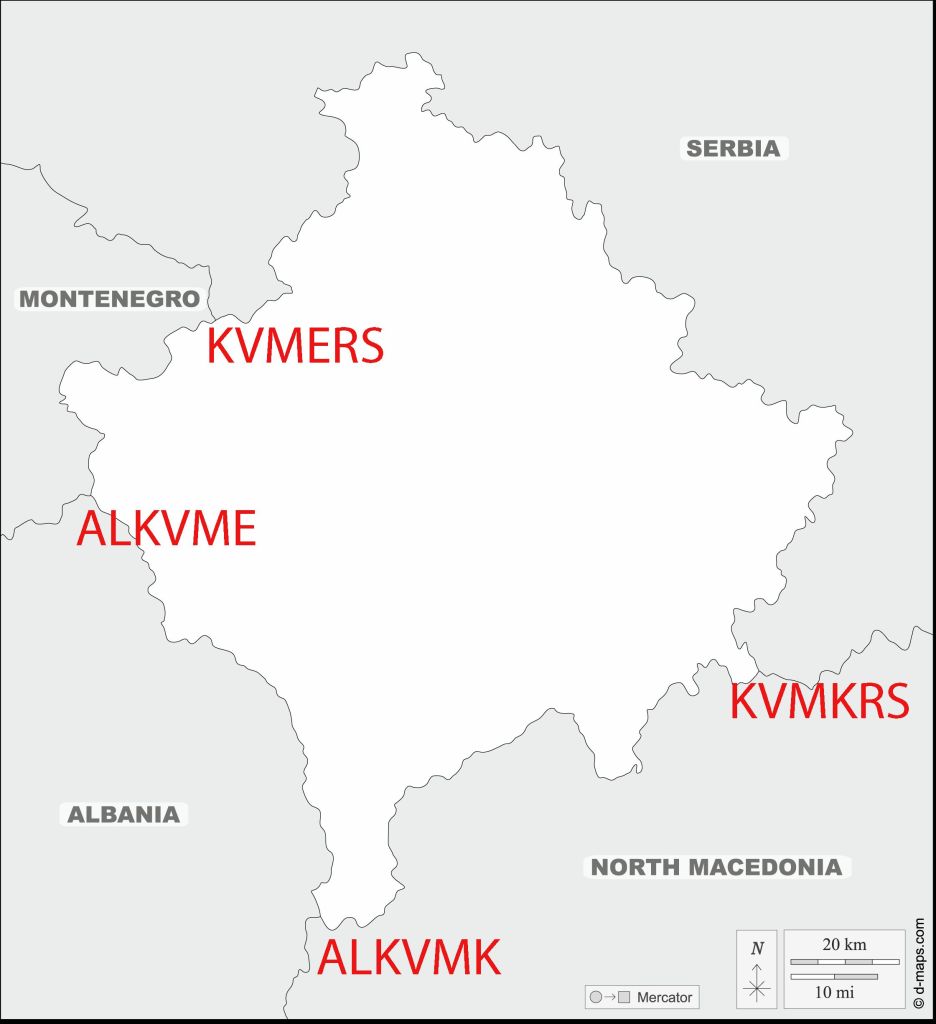
Kosovo – Albania border is 114 kilometres long. It begins at the ALKVME tripoint at the summit of Trekufiri, and follows along the rugged, high-altitude range of the Albanian Alps (Prokletije) in the southwestern corner of Kosovo. It features the highest peak in Kosovo, Mount Gjeravica (2,656 meters), and separates Albania from Kosovo’s western Dukagjin (Metohija) Plain. It ends at the ALKVMK tripoint on the summit of Sherupa (2092m) in the Sharr mountains.
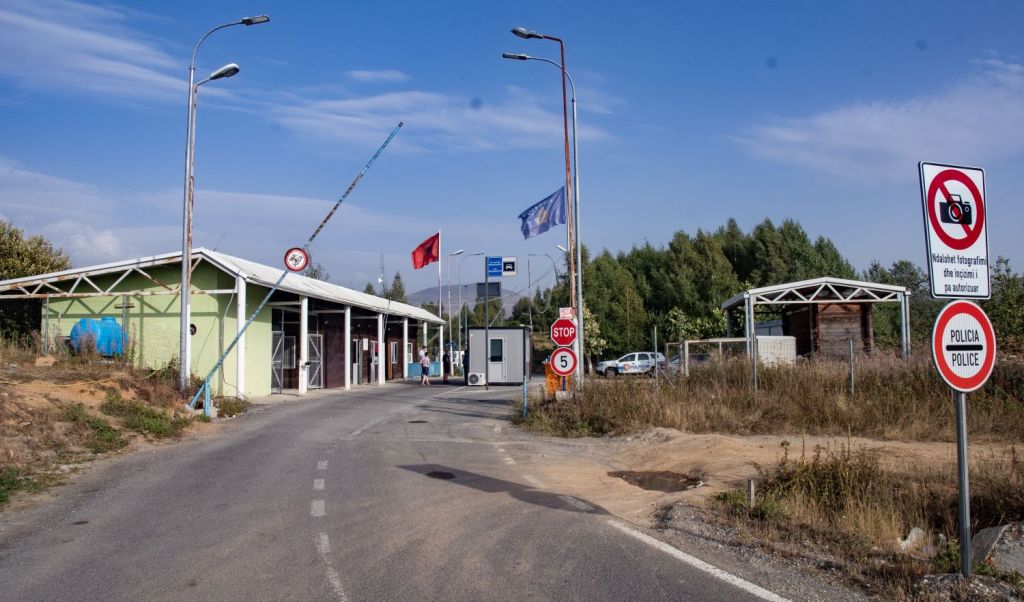
Kosovo – Montenegro border is 78.6 Kilometres long. it begins at the northern KVMERS tripoint at the summit of Beleg mountain (2142m), and it is dominated by the Prokletije and features high alpine terrain, deep glacial valleys, and sharp limestone peaks exceeding 2,000 meters. It finishes at the ALKVME tripoint Trekufiri (2366m) (also known as Three Borders Peak or Tromedja), located in the Bogićevica range of the Accursed Mountains
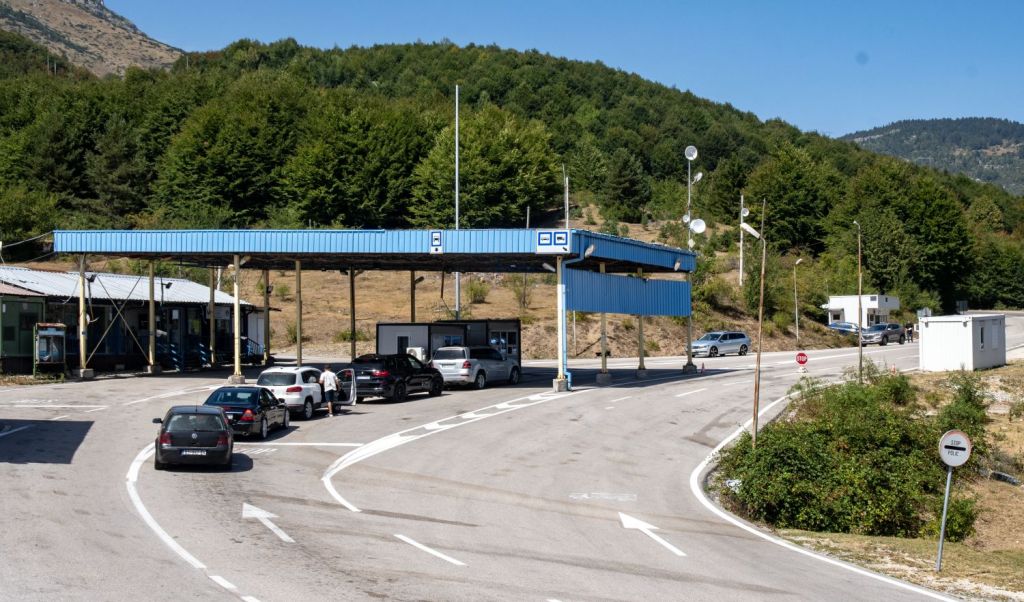
Kosovo – North Macedonia border is approximately 170.8 kilometres along the southeastern edge of Kosovo and the northwestern side of North Macedonia. The boundary is predominantly mountainous, following the rugged ridges of the Sharr Mountains (Šar Planina) There are 3 border crossings. It begins at the ALKVMK tripoint Trekufiri (2366m) and finishes at the KVMKRS tripoint which is situated just west of the Belanovtse-Stancic border crossing
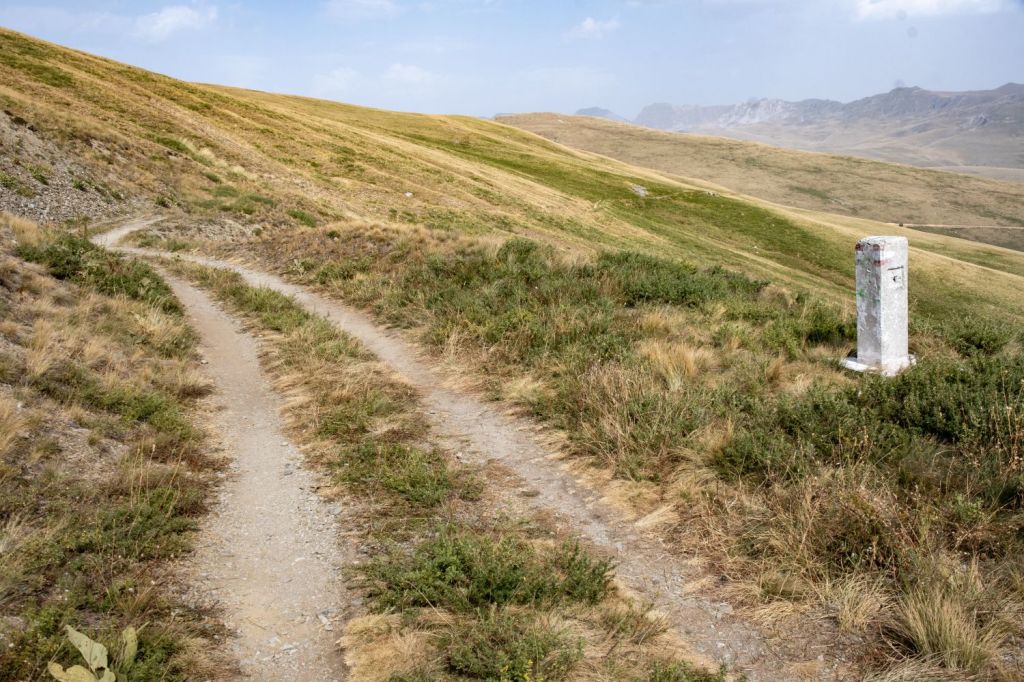
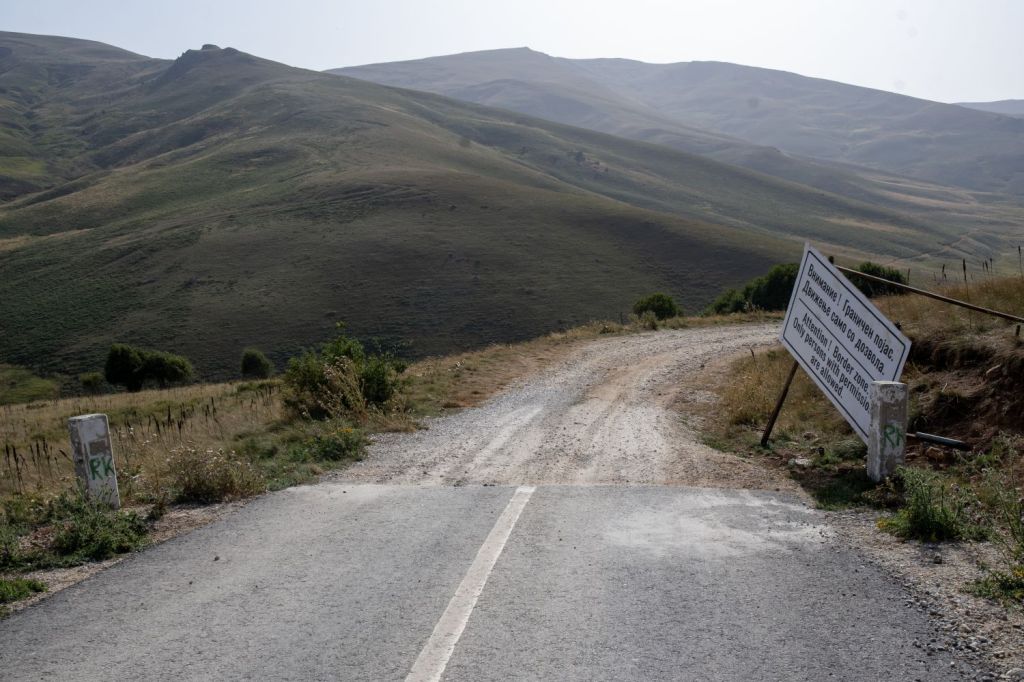
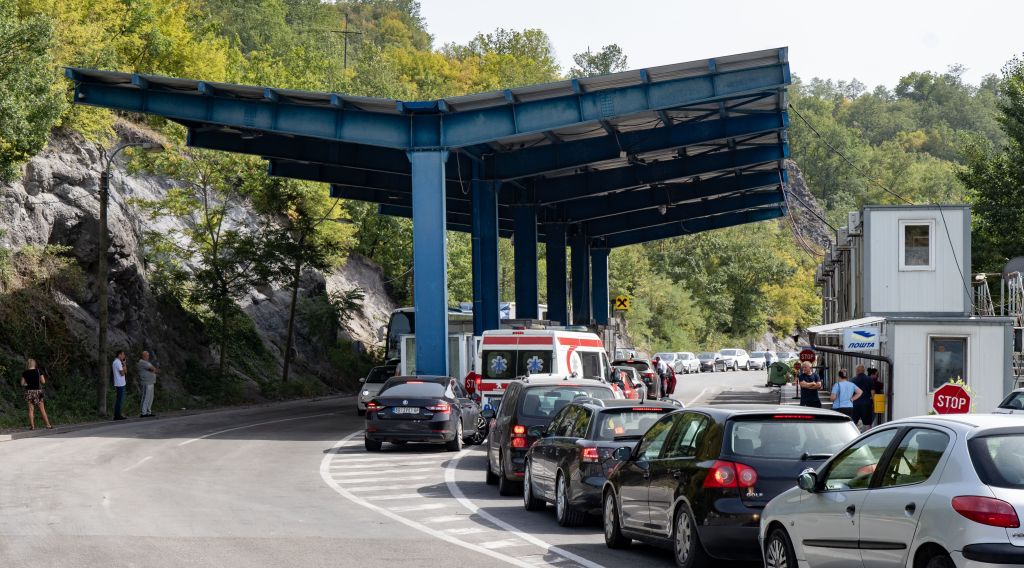
Kosovo –Serbia border is 380 km long. The border is largely defined by rugged, mountainous geography that separates Kosovo’s interior plains from Central Serbia. Serbia treats this border as an “administrative line”; it is under shared control of Kosovo border police and Serbian police forces, and there are 11 crossing points. Whilst it is possible to enter Kosovo from Serbia it is not possible to enter Serbia from Kosovo unless one has entered Serbia first. It begins at KVMERS and ends at KVMKRS.
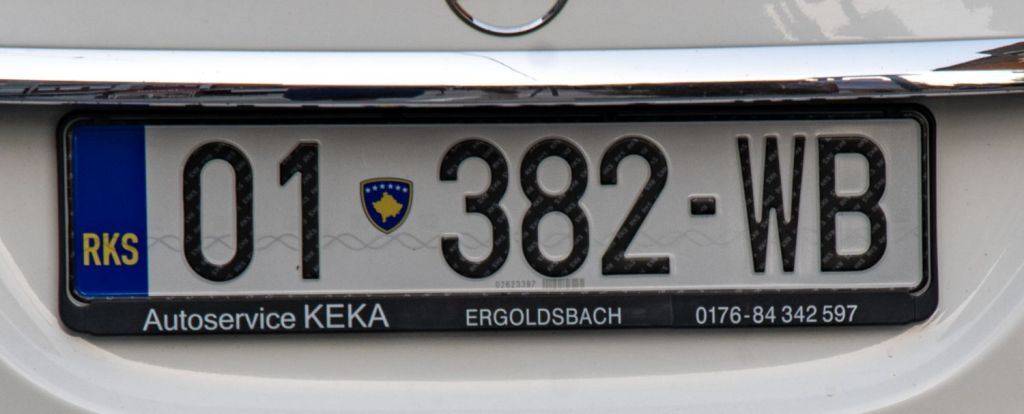
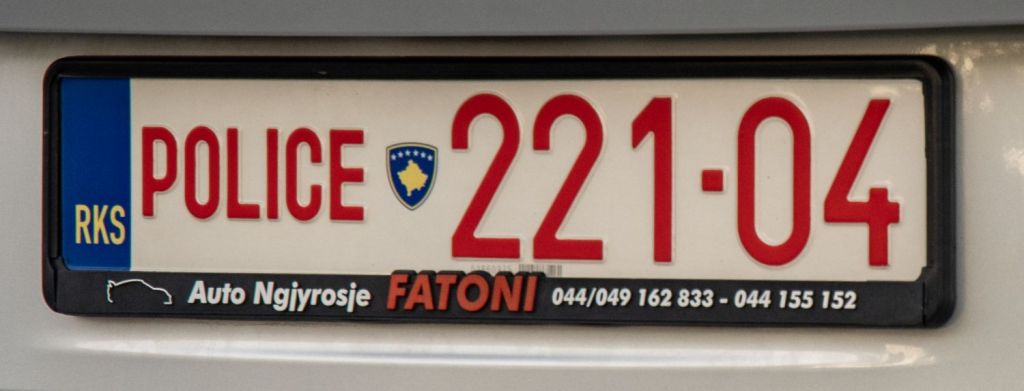
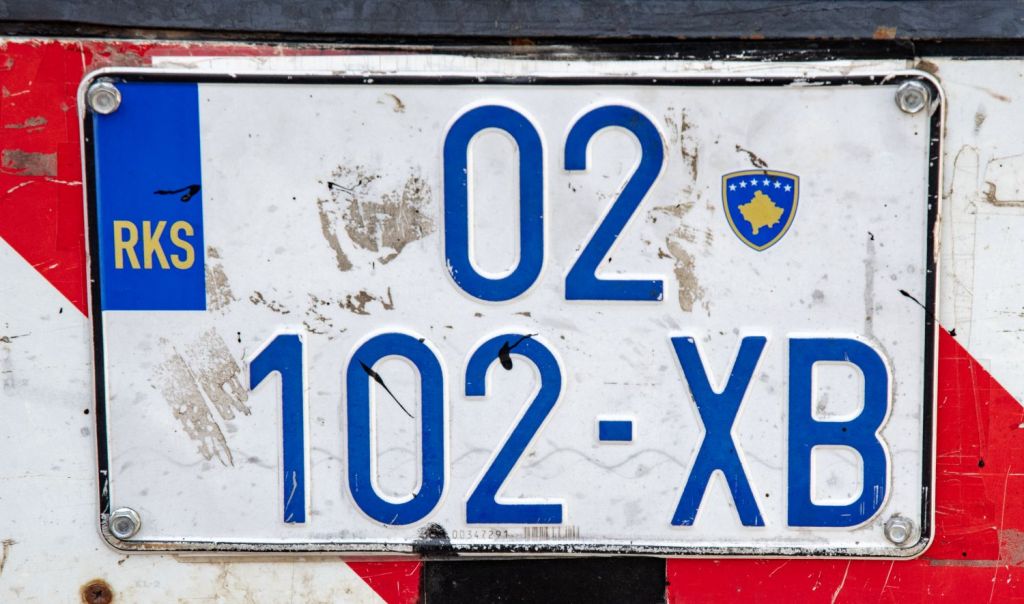
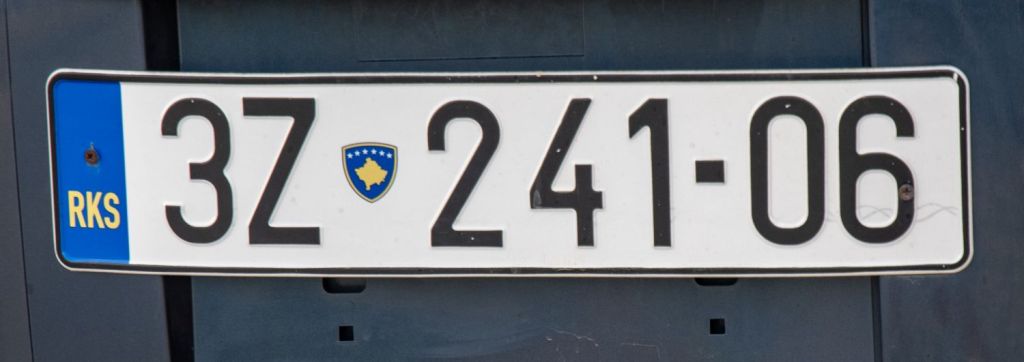
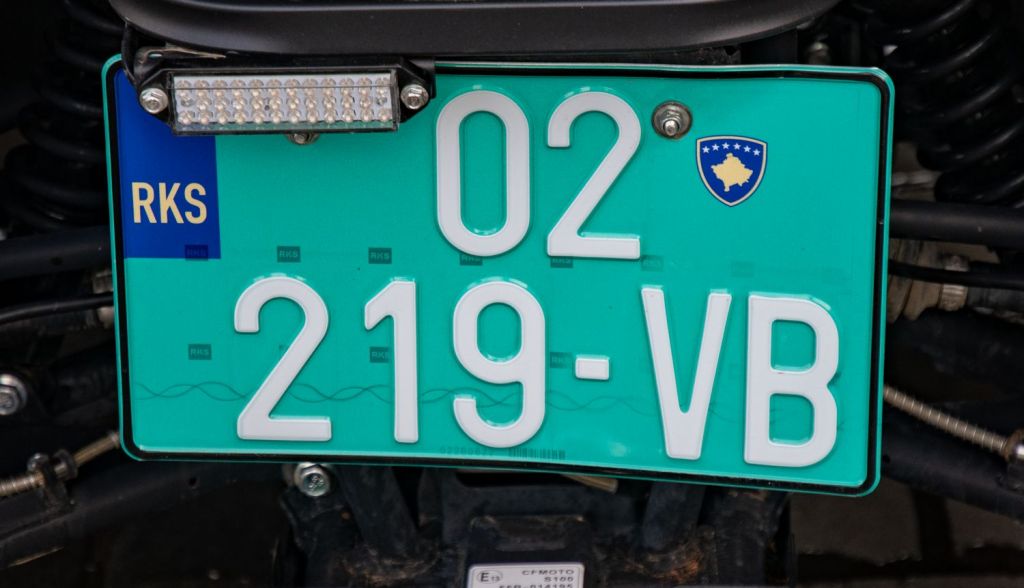
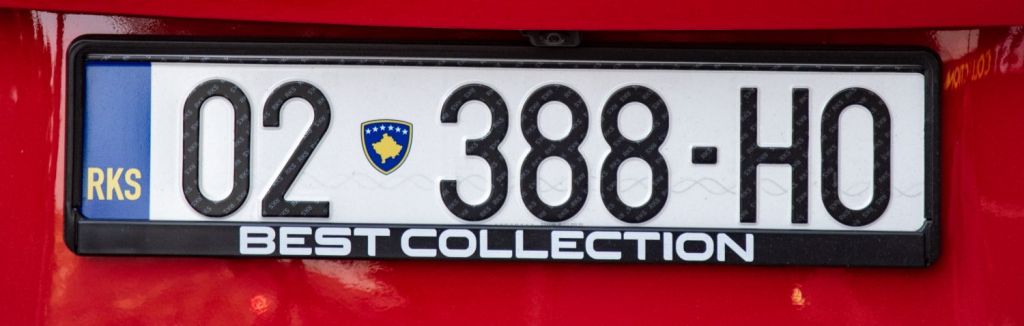
Kosovo Number Plates
Kosovo Tripoints
| Number | Name | countries | coordinates | TYPe | notes |
|---|---|---|---|---|---|
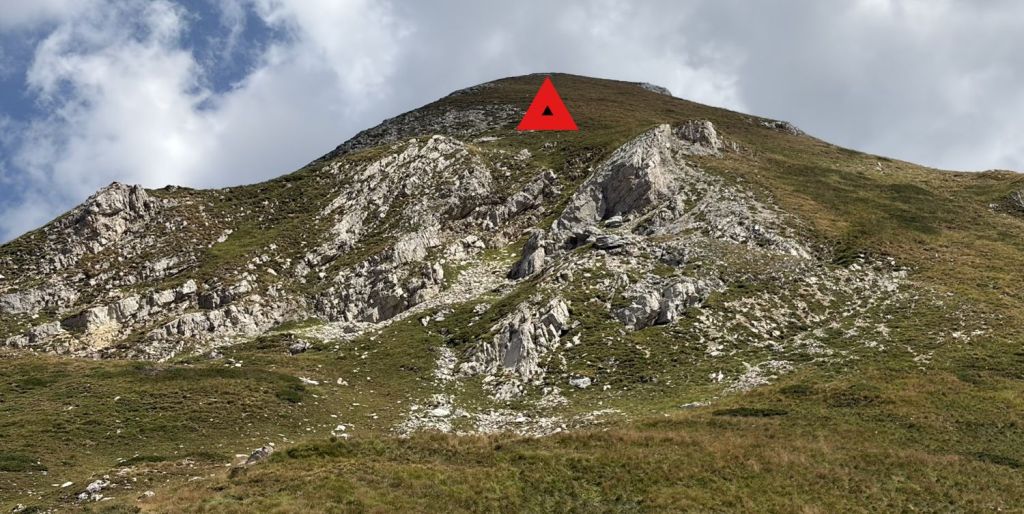
| 1 | ALKVME | Albania – Kosovo – Montenegro | 42°33’22″N 20°04’43″E | Dry | The tripoint of Albania, Kosovo, and Montenegro is located at the summit of Trekufiri, a mountain in the Albanian Alps. There is a tall stone cairn at the summit and several border markers (BM#b28 ALYU 1925). The area is part of the Nacionalni park Prokletije. |
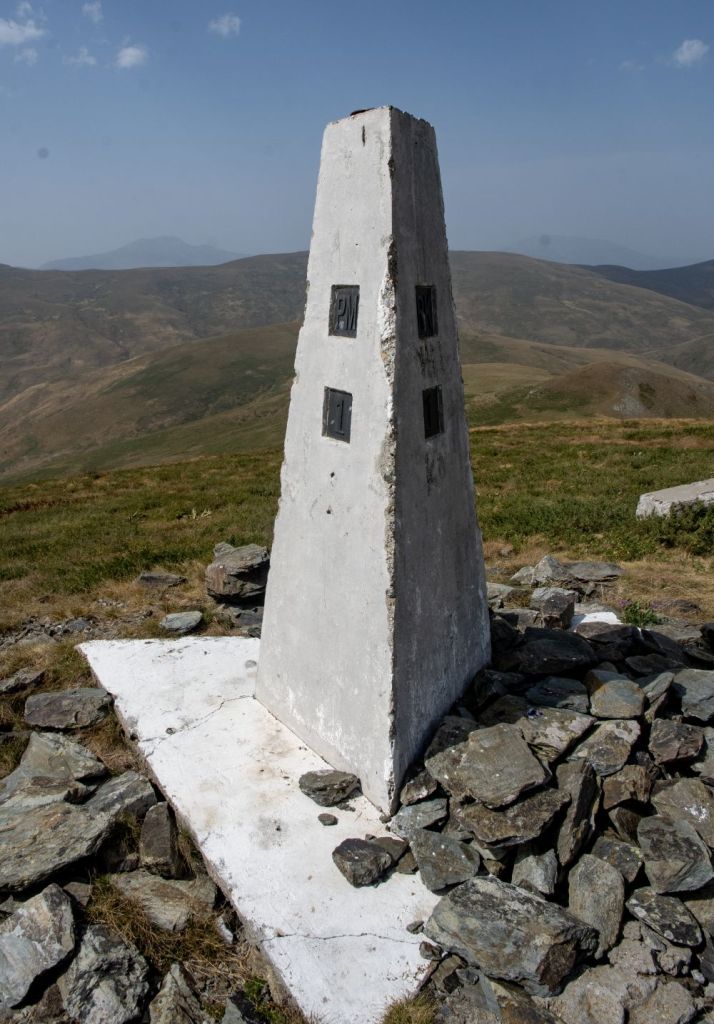
| 2 | ALKVMK | Albania – Kosovo – North Macedonia | 41.87720° N, 20.59459° E | Dry | The tripoint is located on the summit of Sherupa (2092m) in the Sharr mountains. There is a tripoint monument similar to BGMKRS. There’s a trail leading to the summit. |
| 3 | KVMERS | Kosovo – Montenegro – Serbia | 42°15’46″N 21°35’13″E | Dry | The tripoint is located at the summit of Beleg mountain (2142m), a second summit of Mokra Gora. Beleg is located a few kilometres north-west of the town of Istog in Kosovo. There is a metal sculpture and sign marking the summit (but not the tripoint). |
| 4 | KVMKRS | Kosovo – North Macedonia – Serbia | 42°49’58″N 20°21’28″E | Dry | The tripoint is located west of the Belanovtse-Stancic border crossing, it appears to be remote. On google maps there is an indication of a clearing and possible border marker MKRS which might now coincidently be the tripoint . |
Tripoint Gallery
Please click on the images below to access the tripoint visit reports.

Site Navigation
In order to find your way around the site, either click on the links (text in red) or use the menus at the top and side of the pages. About leads you to the main areas of the site. The European Tripoints menu leads directly you to my visit reports whereas the Country Visits page allows you to choose which country to look at first. Clicking on photos can lead you directly to reports too.
Mobile Users Advice
Tables display correctly when holding your mobile horizontally.
To access the links to other pages please click on the 3 horizontal dots at the bottom of the page.

